Local
Laurel Field
A Roundtable is a way to meet new people and discuss this article in person at a local coffee shop or other venue.
Roundtables are designed for groups of four, with a shared subject and room for everyone to speak. Come for discussion, with no dating expectation.
Source: Florida State University News
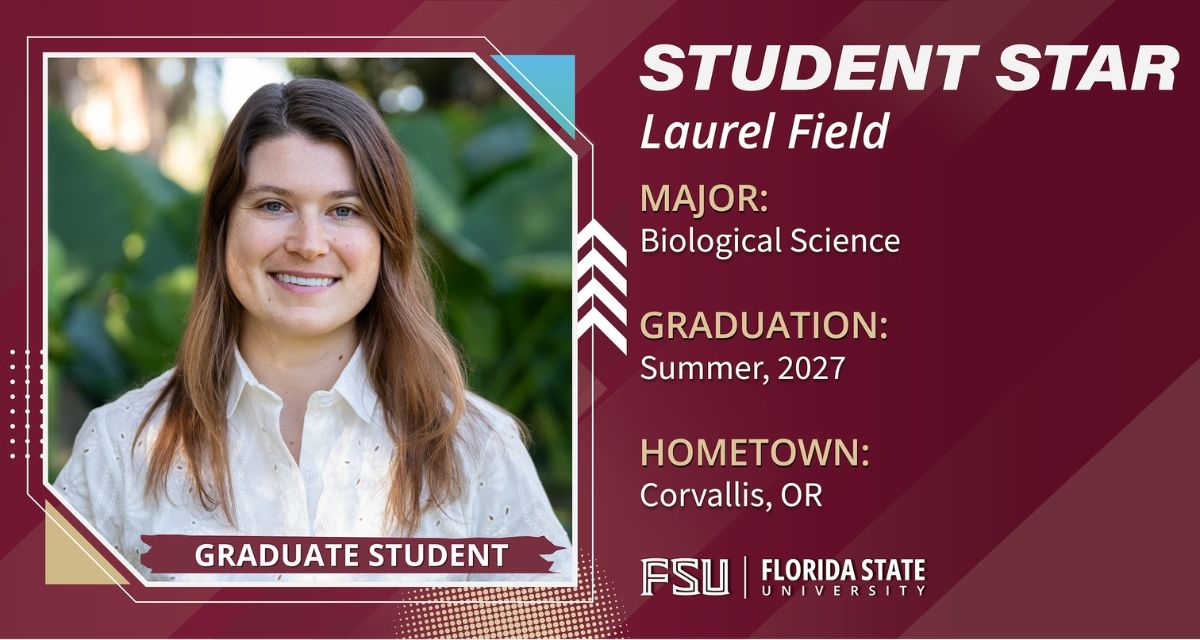
Name: Laurel FieldMajor: Biological ScienceGraduation: Summer 2027Hometown: Corvallis, ORCollege: College of Arts & Sciences Fast Facts Favorite Animal: Horseshoe crab Favorite Hobby: Trying new recipes Proud Accomplishment: More than 230 scuba dives since 2021 Favorite Tallahassee Activity: Indoor rock climbing Favorite Pastime: Reading seven books a month Biological science doctoral student Laurel Field is studying the effects of climate change on coral reefs through research supported by $400,000 in grant funding. Her research has connected residents of Bonaire, an island in the southern Caribbean, with resources to help protect coral reefs. Her work also raises awareness about how climate change threatens the reefs and the tourism industry that depends on them. Through her dissertation research, she has involved 17 other students in coral reef conservation efforts within FSU’s Department of Biological Science.
This excerpt comes from the named source. Read the original for the full reporting.
Read the original at Florida State University News