Local
Learn how to examine soil for signs of compaction
Meet in Common connects news with real conversations. Use ThinkMatch to arrange a Roundtable and meet people to discuss this story.
Source: Farm Talk
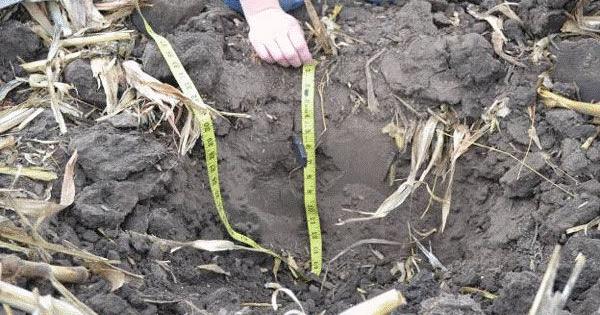
Figure 1. Digging a small hole with a spade is the best way to learn about the soil’s natural and unnatural layers, such as compacted layers. Use a knife to feel for any unusually dense layers, and a tape measure to determine the depth of the layer. (Photo by of DeAnn Presley, K-State Research and Extension) Every year, questions arise about soil compaction. Now is a good time to get out and investigate soil profiles for signs of compaction. There is much you can learn by pushing a tile or soil probe into the ground. First, if you have never done so, you can learn something about the soil profile. How many inches of topsoil do you have? At what depth do you encounter changes in soil textures? Topsoil thickness and soil texture are two properties you can’t really control, at least not in the short term.
This excerpt comes from the named source. Read the original for the full reporting.
Read the original at Farm Talk