Local
Less abrasive than lunar dust, but ultrafine and sticky: What astronauts will face with Martian dust
Meet in Common connects news with real conversations. Use ThinkMatch to arrange a Roundtable and meet people to discuss this story.
Roundtables are designed for groups of four, with a shared subject and room for everyone to speak. Come for discussion, with no dating expectation.
Source: Meteored United States
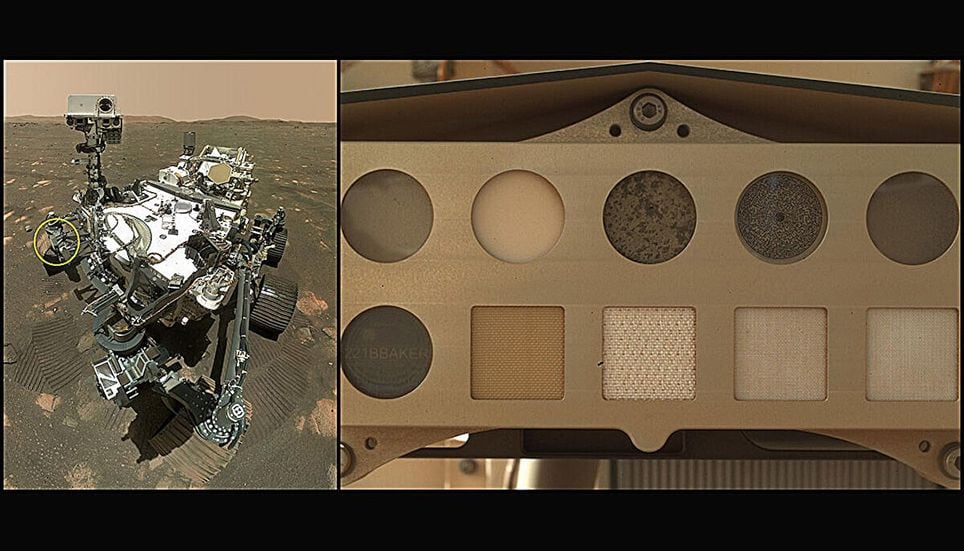
A study using the Perseverance rover reveals Martian dust particles far smaller than expected. Their size and composition pose new challenges for protecting future astronauts. Imagine arriving on Mars and discovering that one of the greatest dangers isn't a massive storm, but the nearly invisible dust clinging to your spacesuit. Recent research shows why this threat deserves attention long before the first human landing. By examining material accumulated on the calibration target of the rover's SHERLOC instrument and combining spectral data with physical models, researchers estimated the thickness of the dust. To do this, they analyzed chemical signals from particles on its surface and test fabrics associated with potential spacesuits, including Vectran and Teflon. Tiny but hard to remove On the instrument's Teflon disk, the estimated particle size was 1.4 micrometers, while on the Vectran fabric, it reached 2.1 micrometers.
This excerpt comes from the named source. Read the original for the full reporting.
Read the original at Meteored United States