Local
Lobbyists mount push against Food Safety, Chemical Disclosure bill
A Roundtable is a way to meet new people and discuss this article in person at a local coffee shop or other venue.
Roundtables are designed for groups of four, with a shared subject and room for everyone to speak. Come for discussion, with no dating expectation.
Source: Observer
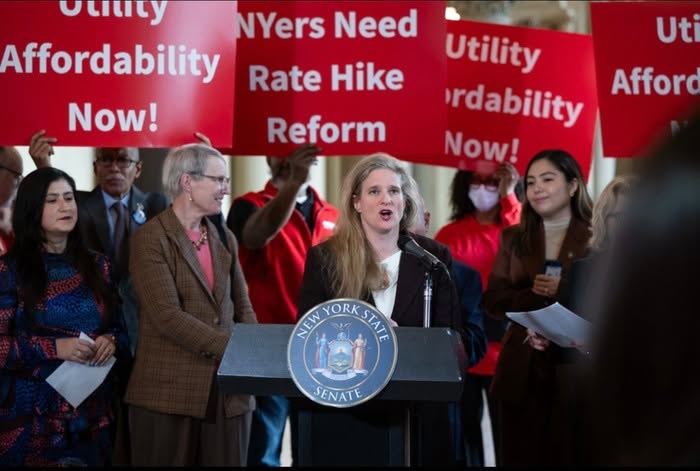
Businesses and labor unions are opposing legislation delivered recently to Gov. Kathy Hochul that would ban three food additives and require food companies to disclose food ingredients they designate as “generally recognized as safe.” The legislation (A1556G/S.1239F) was passed 106-32 in the state Assembly with Assemblyman Andrew Molitor and Assemblyman Joe Sempolinski both voting in favor. The state Senate vote was unanimous with state Sen. George Borrello, R-Sunset Bay, voting in favor. The Food Safety and Chemical Disclosure Act will require food companies to report to New York regulators any food ingredients they designate in-house as “generally recognized as safe” (GRAS) and decline to disclose to the FDA, along with the scientific basis for considering them safe. The state Department of Agriculture and Markets will then make that information publicly available. Assemblywoman Dr. Anna Kelles, D-Ithaca, and Sen.
This excerpt comes from the named source. Read the original for the full reporting.
Read the original at Observer