Local
Longtime WVU basketball analyst, former player Jay Jacobs passes away at 88
A Roundtable is a way to meet new people and discuss this article in person at a local coffee shop or other venue.
Roundtables are designed for groups of four, with a shared subject and room for everyone to speak. Come for discussion, with no dating expectation.
Source: The Intelligencer & Wheeling News Register
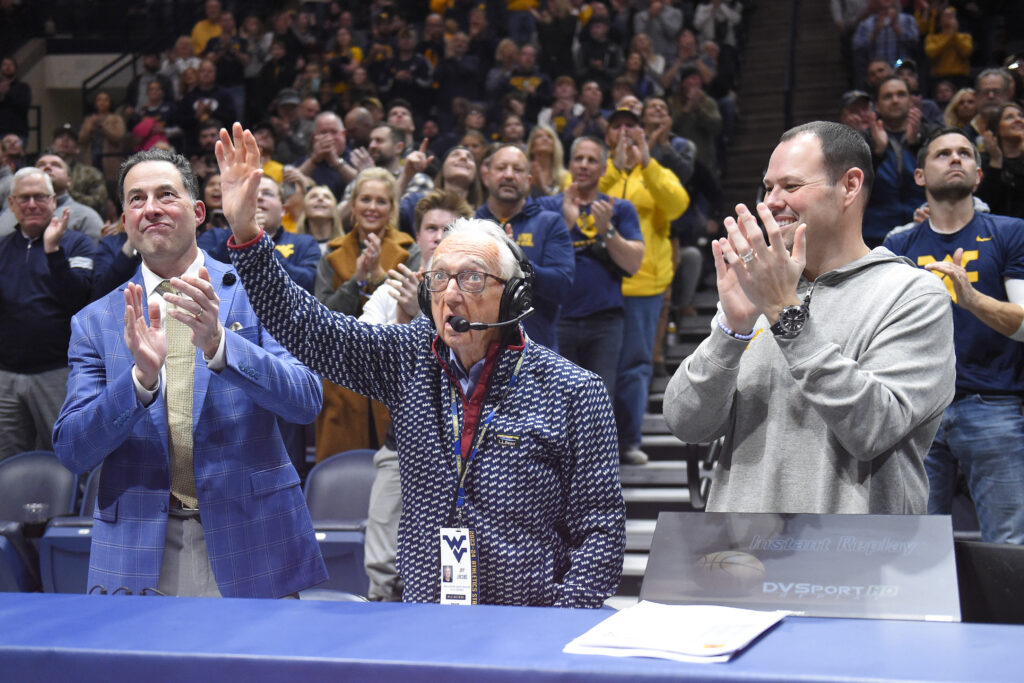
MORGANTOWN — WVU Athletics announced Jay Jacobs, who had been analyzing WVU basketball games for nearly 50 years on the Mountaineer Sports Network, passed away at the age of 88 Wednesday morning. “All of Mountaineer Nation and West Virginia basketball mourn the passing of the beloved ‘Silver Fox,’ Jay Jacobs,” the WVU basketball team said in a statement. “A member of the ‘Golden Era’ of Mountaineer basketball, Jay went on to become a familiar and trusted voice as a radio and television analyst for nearly five decades. His impact on Mountaineer basketball and generations will never be forgotten.” Jacobs started his career when he was hired by Paul Miller as a basketball analyst for MSN television in 1977, and was paired with the late Jack Fleming and Woody O’Hara. He did television for Home Team Sports, Creative Sports Marketing and ESPN during Sun Belt Conference games before moving to radio full-time.
This excerpt comes from the named source. Read the original for the full reporting.
Read the original at The Intelligencer & Wheeling News Register


