Local
MATC (Madison Area Technical College) - Legals - Ad from 2026-11-18
A Roundtable is a way to meet new people and discuss this article in person at a local coffee shop or other venue.
Roundtables are designed for groups of four, with a shared subject and room for everyone to speak. Come for discussion, with no dating expectation.
Source: Wisconsin State Journal
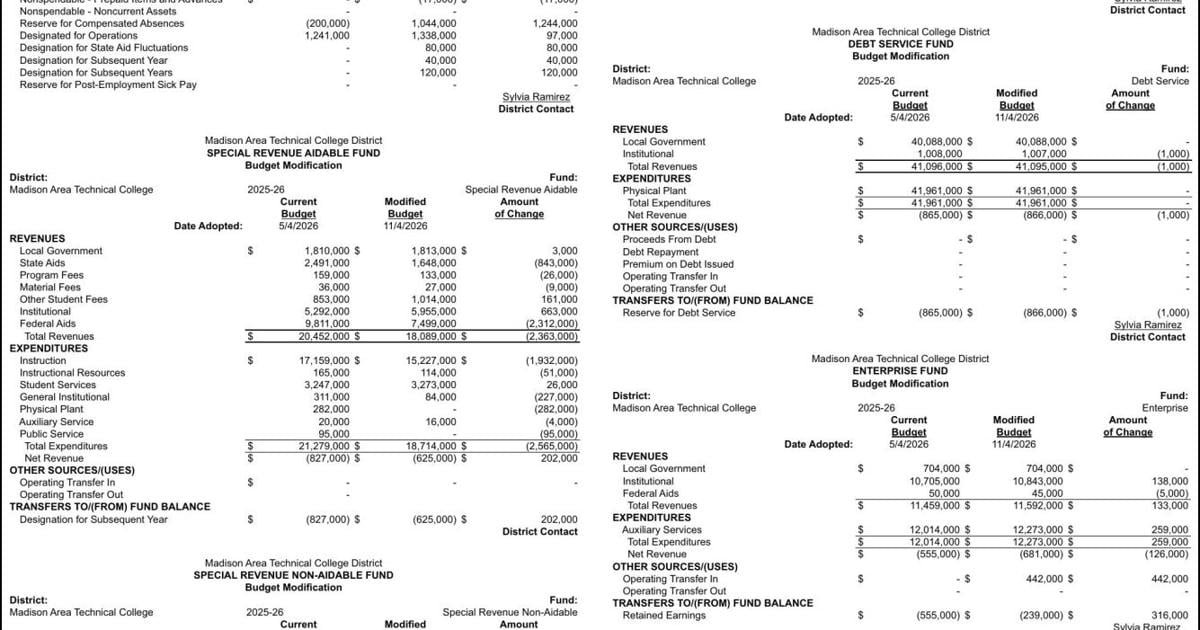
Download PDF Save Share Details for MATC (Madison Area Technical College) - Legals - Ad from 2026-11-18 Nov 18, 2026 Ad details District: Madison Area Technical College Madison Area Technical College District GENERAL FUND Budget Modification 2025-26 Current Budget Date Adopted: 5/4/2026 REVENUES Local Government State Aids Program Fees Material Fees Other Student Fees Institutional Federal Aids Total Revenues EXPENDITURES Instruction Instructional Resources Student Services General Institutional Physical Plant Public Service Total Expenditures Net Revenue OTHER SOURCES/(USES) Operating Transfer In Operating Transfer Out TRANSFERS TO/(FROM) FUND BALANCE Nonspendable - Prepaid Items and Advances Nonspendable - Noncurrent Assets Reserve for Compensated Absences Designated for Operations Designation for State Aid Fluctuations Designation for Subsequent Year Designation for Subsequent Years Reserve for Post-Employment Sick Pay District: Madison Area Technical College 47,574,000 $…
This excerpt comes from the named source. Read the original for the full reporting.
Read the original at Wisconsin State Journal