Local
Mazda MX-5 Miata offers an exhilarating ride
A Roundtable is a way to meet new people and discuss this article in person at a local coffee shop or other venue.
Roundtables are designed for groups of four, with a shared subject and room for everyone to speak. Come for discussion, with no dating expectation.
Source: The Vindicator
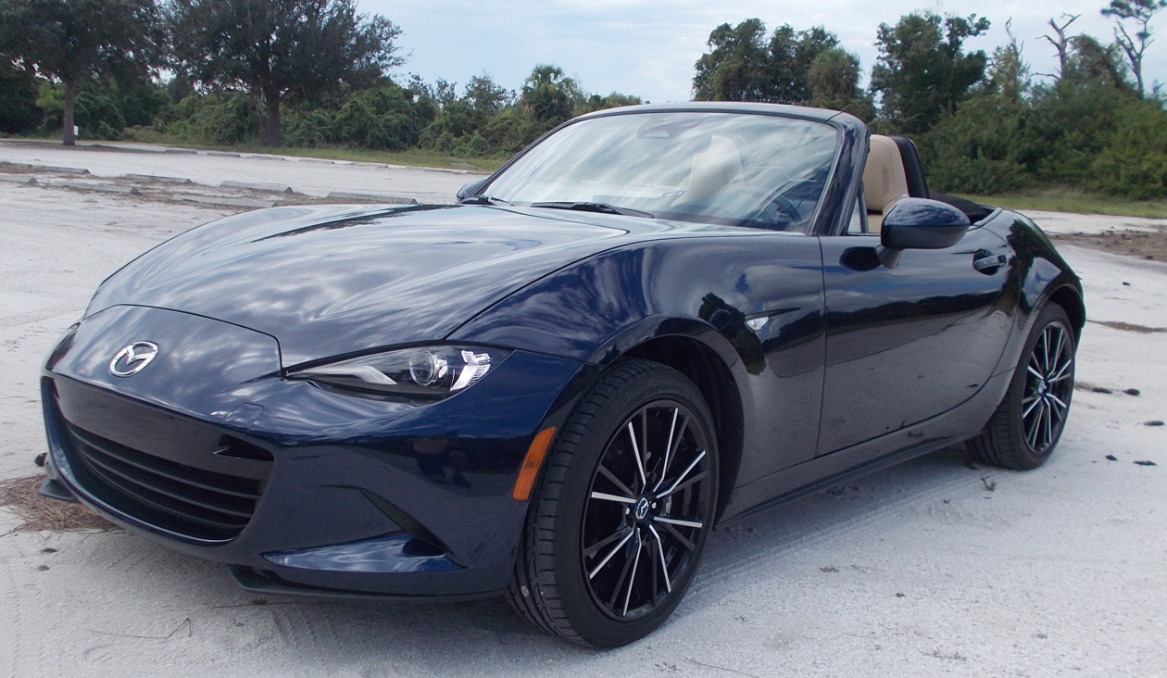
For more than three decades the iconic Mazda Miata has delighted its owners with a fun and affordable sports car experience for not a lot of coin. The little racer is available in seven trim levels for 2026 — five with manual six-speed short shift patterns and two with six-speed automatic transmissions. Prices range from the low $30s for the Sport trim to the mid-$40s for the RF Club. Each is powered by a 2.0-liter, four-cylinder naturally-aspirated engine producing 181 ponies and 151 lb.-ft of torque. The short-shift pattern is easy to get used to and fits like a glove for all around driving. At our independent test track, the Miata managed a 6.2-second run from a dead stop to 60 miles-per-hour – a few tenths of a second slower than corporate partners’ Subaru BRZ and Toyota GR86 – both coupes only. This roadster is a blast to drive. It hugs the road with 17-inch alloys and high-performance tires, sport-tuned suspension and Bilstein shocks.
This excerpt comes from the named source. Read the original for the full reporting.
Read the original at The Vindicator


