Local
Medicaid work and reporting rules threaten coverage for 350 Northwest Corner adults: report
A Roundtable is a way to meet new people and discuss this article in person at a local coffee shop or other venue.
Roundtables are designed for groups of four, with a shared subject and room for everyone to speak. Come for discussion, with no dating expectation.
Source: Lakeville Journal
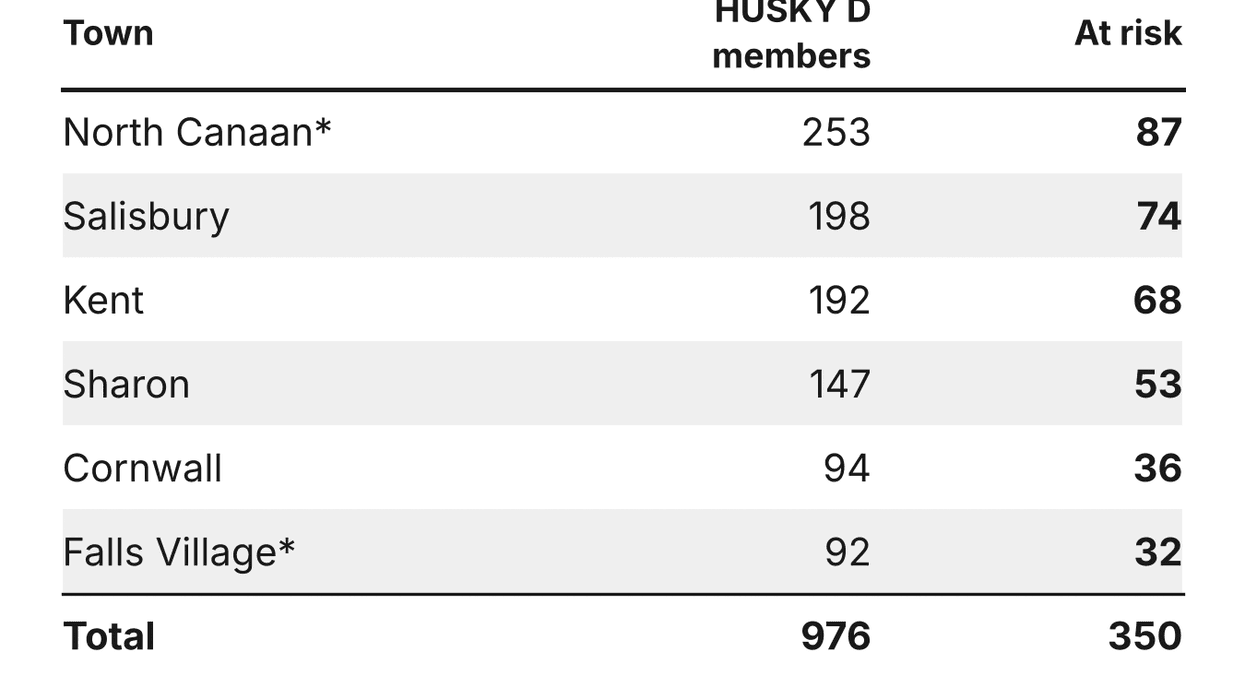
NORTHWEST CORNER — An estimated 350 adults across six Northwest Corner towns could lose Medicaid coverage under new federal work and reporting requirements, according to a Nov. 8 report by DataHaven and Health Equity Solutions. The requirements, enacted as part of President Donald Trump’s One Big Beautiful Bill Act, take effect Jan. 1, 2027. Connecticut provides Medicaid coverage through several HUSKY programs that serve eligible children, parents and caregivers, older adults and people with disabilities. The new work rules apply to certain adults ages 19 to 64 enrolled in HUSKY D, the part of Connecticut’s Medicaid program that covers low-income adults without children. The program’s income limit is $22,025 for a single adult and $29,863 in combined income for a married couple with no dependents. The six towns have 976 residents enrolled in HUSKY D, according to the report.
This excerpt comes from the named source. Read the original for the full reporting.
Read the original at Lakeville Journal