Local
Meet Louisville mayoral candidate: Shameka Parrish-Wright
A Roundtable is a way to meet new people and discuss this article in person at a local coffee shop or other venue.
Roundtables are designed for groups of four, with a shared subject and room for everyone to speak. Come for discussion, with no dating expectation.
Source: Spectrum News
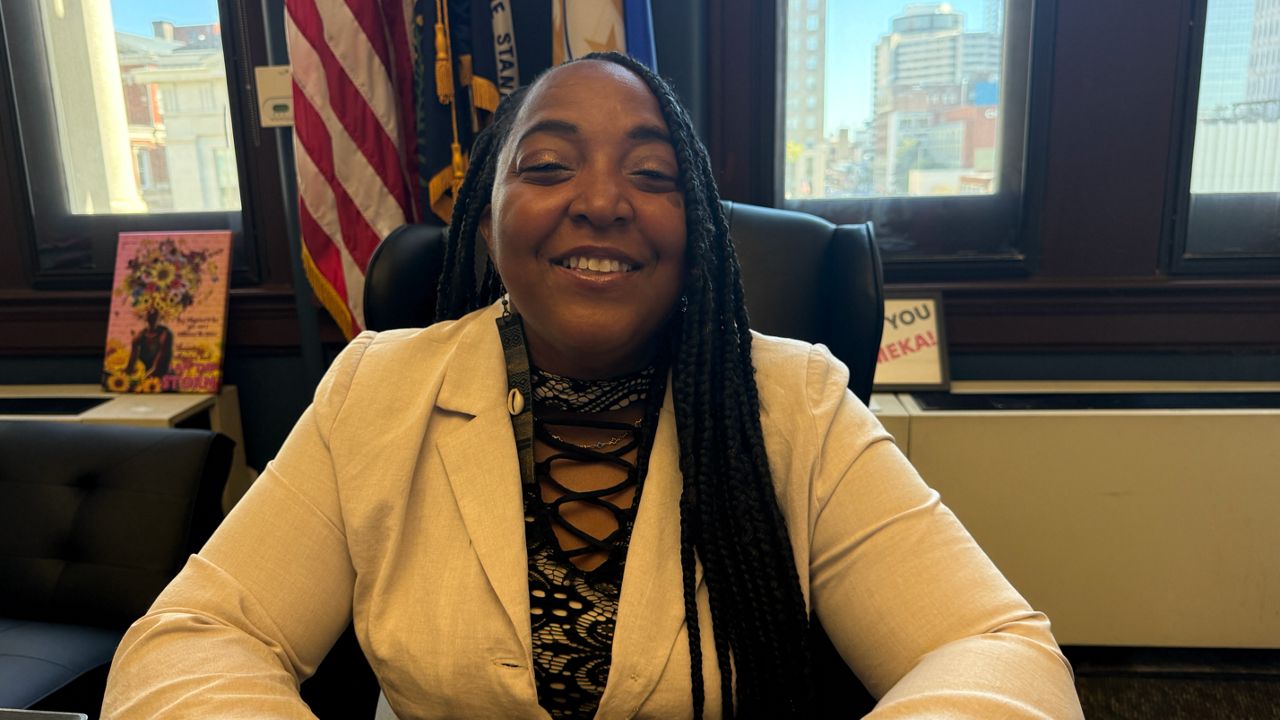
LOUISVILLE, Ky. — Shameka Parrish-Wright is challenging incumbent Craig Greenberg in the city’s first nonpartisan general election, meaning candidates’ party affiliations will not appear on the ballot. Parrish-Wright advanced from the primary and is hoping to become Louisville’s next mayor. Greenberg, who is seeking a second term, won 52% of the primary vote compared with Parrish-Wright’s 26%. Parrish-Wright said lived experience is central to her campaign, pointing to times she experienced homelessness in Louisville. “I was homeless here twice when I was in Louisville and navigating poverty,” Parrish-Wright said. “I know what it takes, what systems, what programs it took to help me and my family build stability.” She said people who have faced similar challenges deserve a voice in city government. Parrish-Wright said that mission builds on her work as a councilwoman and leading VOCAL KY, a nonprofit focused on ending poverty and mass incarceration.
This excerpt comes from the named source. Read the original for the full reporting.
Read the original at Spectrum News


