Local
Michigan football welcomes No. 4-ranked UCLA to Ann Arbor for first Big Ten meeting between programs
A Roundtable is a way to meet new people and discuss this article in person at a local coffee shop or other venue.
Roundtables are designed for groups of four, with a shared subject and room for everyone to speak. Come for discussion, with no dating expectation.
Source: ClickOnDetroit | WDIV Local 4
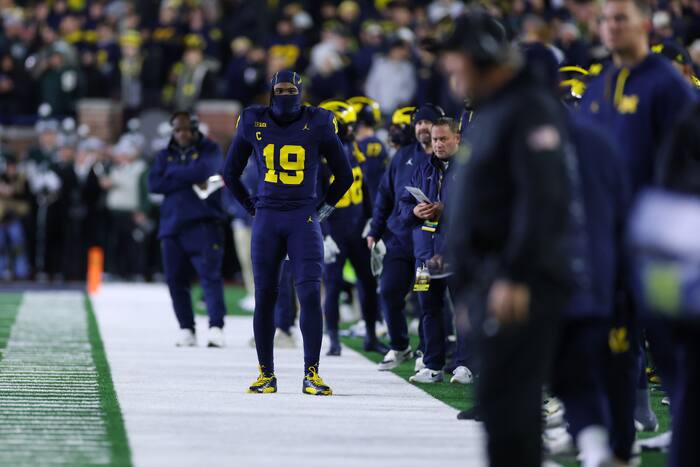
What to know: The Michigan Wolverines return to Ann Arbor to host the No. 4-ranked UCLA Bruins on Saturday, Nov. 21. The game marks the first meeting between the programs as Big Ten Conference members. This will be the 12th matchup between Michigan and UCLA. Michigan leads the all-time series 8-3. The teams last met Sept. 16, 2000, when No. 14 UCLA defeated No. 3 Michigan, 23-20. Michigan won the first five meetings between the programs and holds a 5-1 record against UCLA at Michigan Stadium. Michigan won the 1981 Bluebonnet Bowl. UCLA won the 1982 Rose Bowl. Recommended Videos ANN ARBOR, Mich. —The Michigan Wolverines return to Ann Arbor this weekend to host the No. 4-ranked UCLA Bruins in a matchup that marks the first meeting between the programs as Big Ten Conference members. The Wolverines and Bruins will meet for the 12th time Saturday (Nov. 21), with Michigan holding an 8-3 advantage in the all-time series. The teams last played Sept. 16, 2000, when No. 14 UCLA defeated No.
This excerpt comes from the named source. Read the original for the full reporting.
Read the original at ClickOnDetroit | WDIV Local 4


