Local
NCAA Drops Mandatory Pregame Coach Handshake Rule Ahead of Women’s NCAA Tournament
A Roundtable is a way to meet new people and discuss this article in person at a local coffee shop or other venue.
Roundtables are designed for groups of four, with a shared subject and room for everyone to speak. Come for discussion, with no dating expectation.
Source: Just Women's Sports
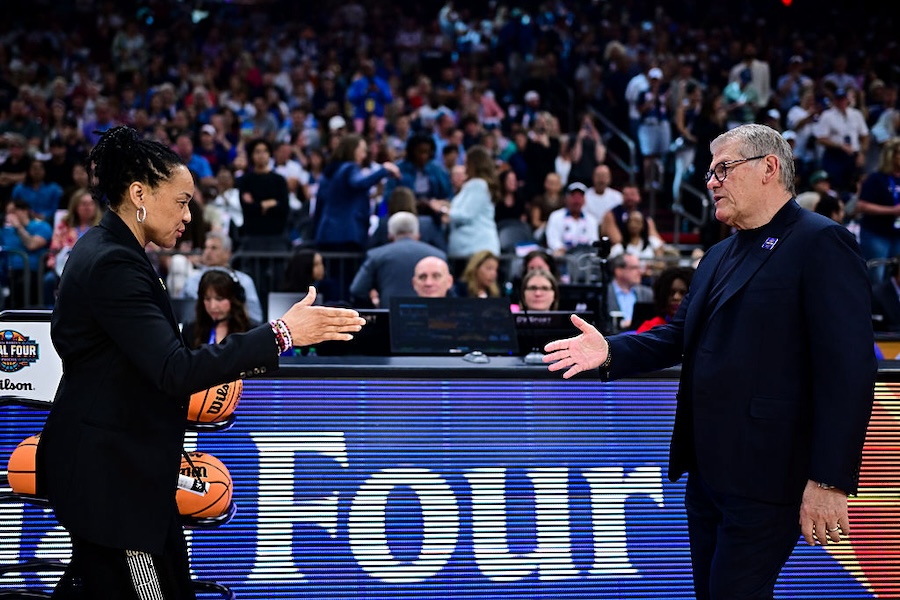
College basketball pregame is changing. The NCAA informed DI programs this weekend that coaches are no longer required to shake hands before each NCAA Tournament game. Coaches will be encouraged to shake hands informally before team introductions. But the move will not be mandatory or enforced by the DI women’s basketball committee. This weekend’s memo also addressed media access changes between the Sweet 16 and the Elite Eight. There will also be a requirement for shot clocks to display tenths of a second in the opening round. There will also no longer be mandatory news conferences or locker room access for in-person media between the Sweet 16 and the Elite Eight The women’s tournament will expand to a record 76 teams in 2027. The pregame change coincides with No. 1 South Carolina and No. 7 UConn’s 2026 Final Four rematch. In April 2026 Huskies head coach Geno Auriemma took offense to waiting for Gamecocks coach Dawn Staley’s pregame handshake.
This excerpt comes from the named source. Read the original for the full reporting.
Read the original at Just Women's Sports


