Local
New York's AI chatbot toy ban starts Feb. 22, 2027, after the holidays
A Roundtable is a way to meet new people and discuss this article in person at a local coffee shop or other venue.
Roundtables are designed for groups of four, with a shared subject and room for everyone to speak. Come for discussion, with no dating expectation.
Source: AIStockWire
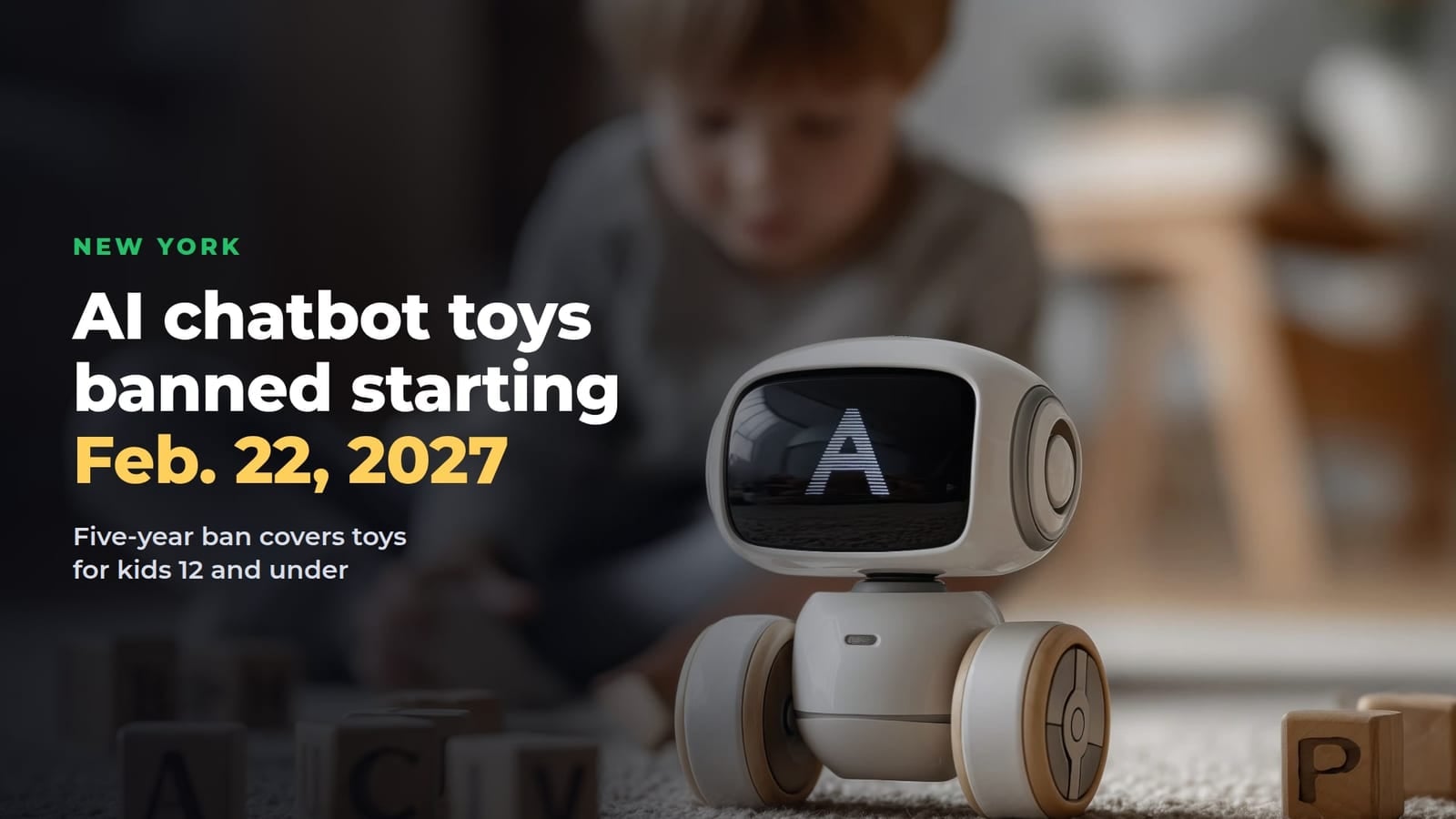
Key points New York's AI toy ban won't touch this holiday shopping season Testers found AI toys talking with kids about sex and where to find matches New York's ban targets sellers and AI companies, not families who own the toys New York Gov. Kathy Hochul signed a five-year ban on AI chatbot toys on Nov. 24, covering talking stuffed animals, dolls, robots, and other toys that use the internet to hold conversations with kids. The ban doesn't take effect until Feb. 22, 2027, 90 days after she signed it, so it won't apply during this holiday shopping season, according to the governor's office. Once it starts, the law bars anyone from making, exchanging, holding for sale, distributing, or selling a chatbot toy in New York. It expires five years after it takes effect, according to the bill text. The law doesn't make it illegal for a family to own or use a toy it already has.
This excerpt comes from the named source. Read the original for the full reporting.
Read the original at AIStockWire