Local
Norio Uyematsu Reconnects With Heritage During Oct. Japan Visit
A Roundtable is a way to meet new people and discuss this article in person at a local coffee shop or other venue.
Roundtables are designed for groups of four, with a shared subject and room for everyone to speak. Come for discussion, with no dating expectation.
Source: Pacific Citizen
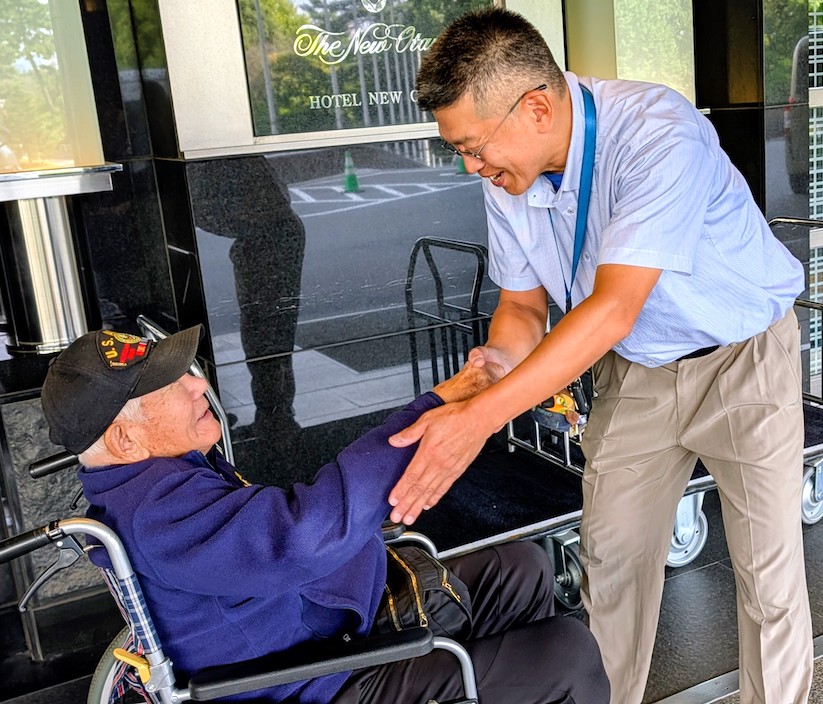
Kentaro Honma (right) greets his Great-Great Uncle Norio Uyematsu in Tokyo. (Photo: Patti Hirahara) As Norio Uyematsu, a member of the Wasatch Front North JACL, continues to promote the story of the Japanese American Korean War experience as a military veteran and his forced incarceration during World War II, his journey led him to an unexpected reunion. As I wrote in the May 1-14, 2026, edition of the Pacific Citizen, Norio and I spoke before 350 students at Tohrei Gakuen Fujisawa Junior High School last March in Kanagawa Prefecture in Japan. Three newspaper articles were published about the event, the last one appearing in the March 27 edition of the Kanagawa Shimbun. As chance would have it, his late sister’s grandson, Kentaro Honma, read the article in the Kanagawa Shimbun and immediately called the reporter, Takuro Yazawa, to tell him that Norio was his relative.
This excerpt comes from the named source. Read the original for the full reporting.
Read the original at Pacific Citizen


