Local
November 21 in Rap History
A Roundtable is a way to meet new people and discuss this article in person at a local coffee shop or other venue.
Roundtables are designed for groups of four, with a shared subject and room for everyone to speak. Come for discussion, with no dating expectation.
Source: Raptology
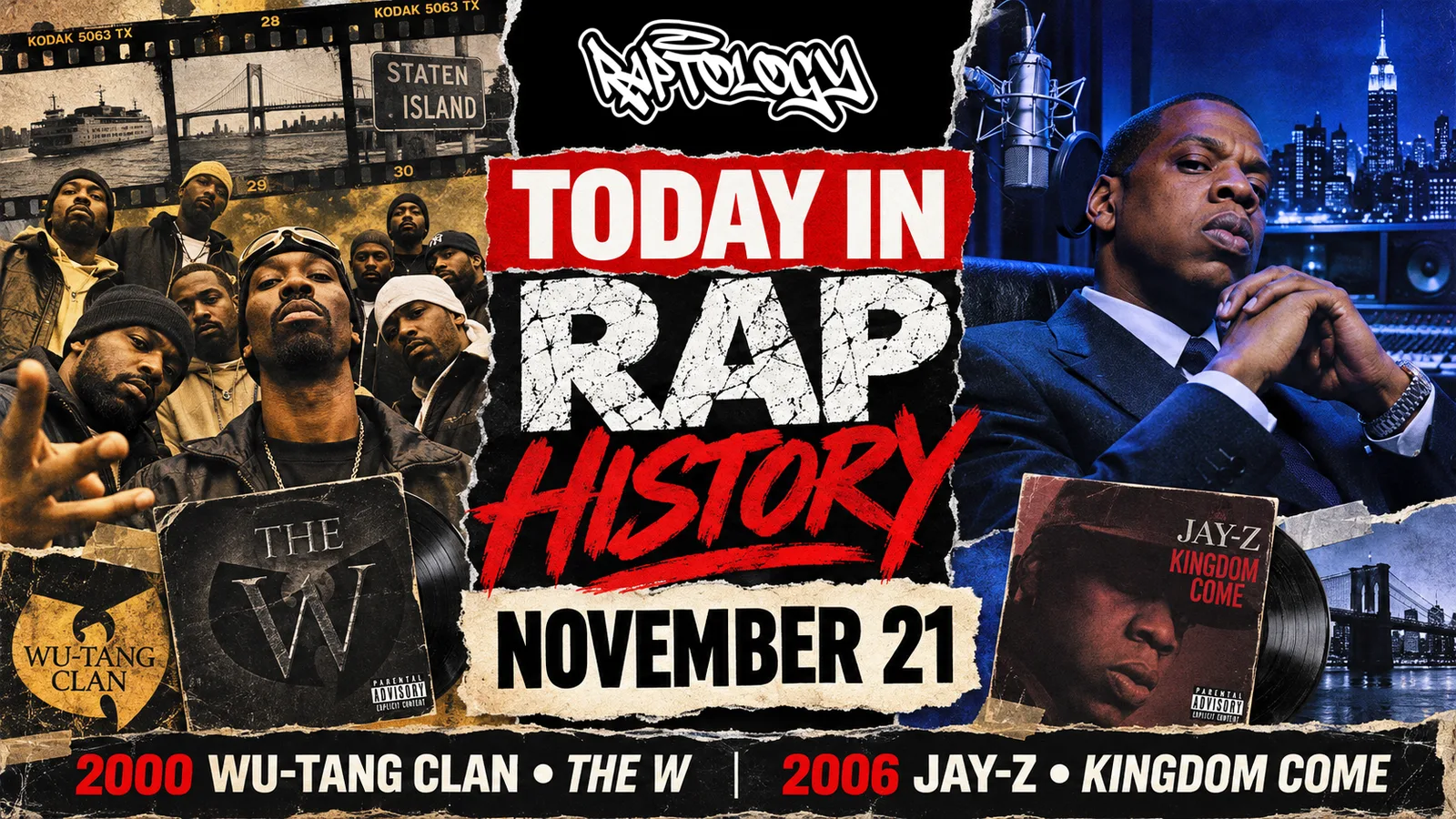
November 21 connects two New York rap releases made with different questions hanging over them. Wu-Tang Clan’s The W brought the group back together in 2000 after a busy stretch of solo records. In 2006, JAY-Z returned from his announced retirement with Kingdom Come, an album about what it meant to keep rapping after becoming a music executive. 2000 – Wu-Tang Clan releases The W Columbia released The W on November 21, 2000. The group’s third studio album followed the sprawling double album Wu-Tang Forever. Its tighter running time made the exchanges between the MCs feel immediate. “Protect Ya Neck (The Jump Off)” turns the microphone into a relay baton, with each entrance changing the pressure of the track. “Gravel Pit” gives the record a hook built to travel, while “I Can’t Go to Sleep” lets Ghostface Killah and RZA sound exposed over a sweeping arrangement. The distance between those songs is part of the album’s appeal.
This excerpt comes from the named source. Read the original for the full reporting.
Read the original at Raptology