Local
November 23 in Rap History
A Roundtable is a way to meet new people and discuss this article in person at a local coffee shop or other venue.
Roundtables are designed for groups of four, with a shared subject and room for everyone to speak. Come for discussion, with no dating expectation.
Source: Raptology
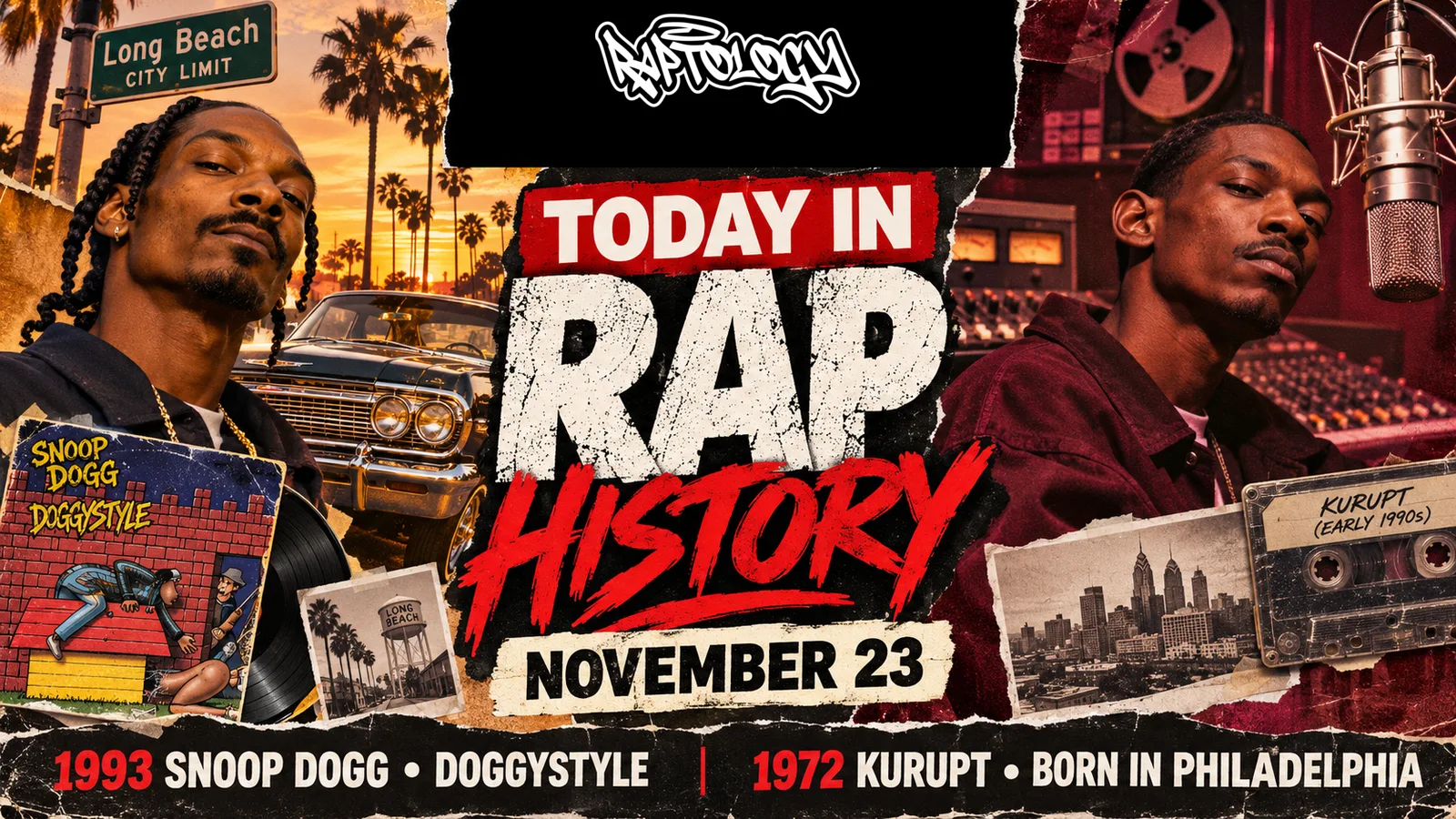
November 23 connects two voices at the heart of West Coast rap: Snoop Dogg released Doggystyle in 1993, while Kurupt was born on this date in 1972. One made unhurried phrasing feel commanding; the other brought a sharper, tightly packed attack. Their contrast helps explain the range inside the Death Row sound. 1993 – Snoop Dogg releases Doggystyle Released on November 23, 1993, through Death Row and Interscope, Doggystyle put Snoop’s voice at the center of a full-length solo statement. His official album archive confirms the date. The record rewards attention to rhythm. On “Gin and Juice,” Snoop lets syllables hang behind the beat, turning a conversational delivery into the hook’s engine. “Who Am I (What’s My Name)?” makes the introduction feel communal, with the chorus answering the rapper like a crowd already familiar with him. Those songs remain useful entry points into G-funk because their polish never erases their local character.
This excerpt comes from the named source. Read the original for the full reporting.
Read the original at Raptology