Local
Nvidia (NVDA) halts server shipments to Malaysia, Singapore, Thailand, and Indonesia under a new US license rule
A Roundtable is a way to meet new people and discuss this article in person at a local coffee shop or other venue.
Roundtables are designed for groups of four, with a shared subject and room for everyone to speak. Come for discussion, with no dating expectation.
Source: AIStockWire
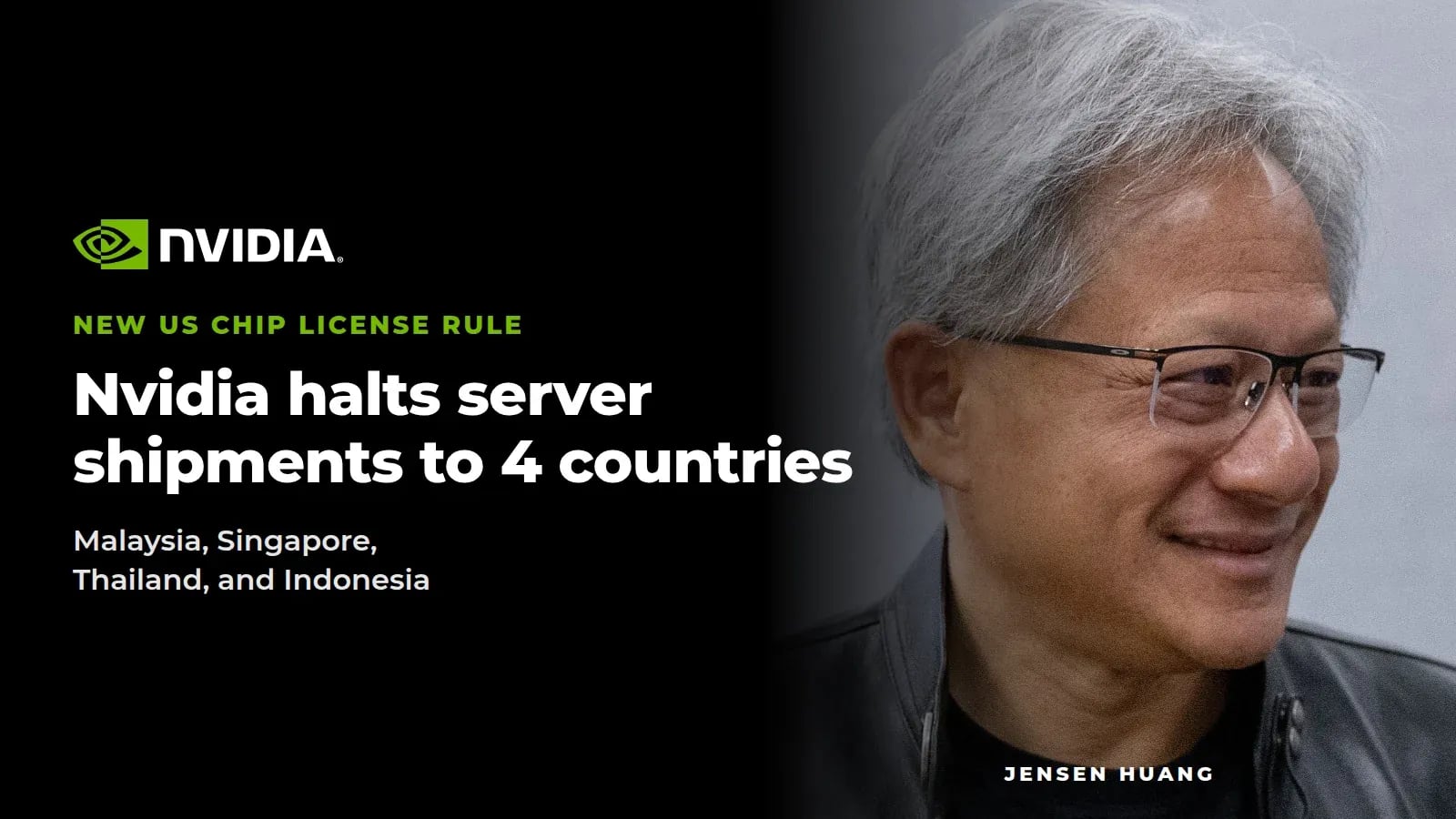
Key points Nvidia told Dell and Supermicro to stop shipping its servers to four Southeast Asian countries Nvidia's halt follows a US licensing rule for advanced chips sent to the region Nvidia booked $104 billion through its Singapore unit in 2025, the FT reported Nvidia (NVDA) has told manufacturing partners to stop shipping servers that contain its chips to Malaysia, Singapore, Thailand, and Indonesia, the Financial Times reported on Nov. 26. Partners including Dell Technologies (DELL) and Super Micro Computer (SMCI), which build Nvidia's chips into servers, have told buyers in those countries that Nvidia won't allow their orders to ship, according to the report. It's unclear whether the halt is temporary while Nvidia and its partners work out how to comply with new US export controls, the FT reported. Nvidia declined to comment. Dell and Supermicro didn't respond to the newspaper's requests for comment. A US license rule for the four countries took effect Nov.
This excerpt comes from the named source. Read the original for the full reporting.
Read the original at AIStockWire