Local
Old Town posse saddles up Scottsdale's legendary Pink Pony
A Roundtable is a way to meet new people and discuss this article in person at a local coffee shop or other venue.
Roundtables are designed for groups of four, with a shared subject and room for everyone to speak. Come for discussion, with no dating expectation.
Source: East Valley Tribune
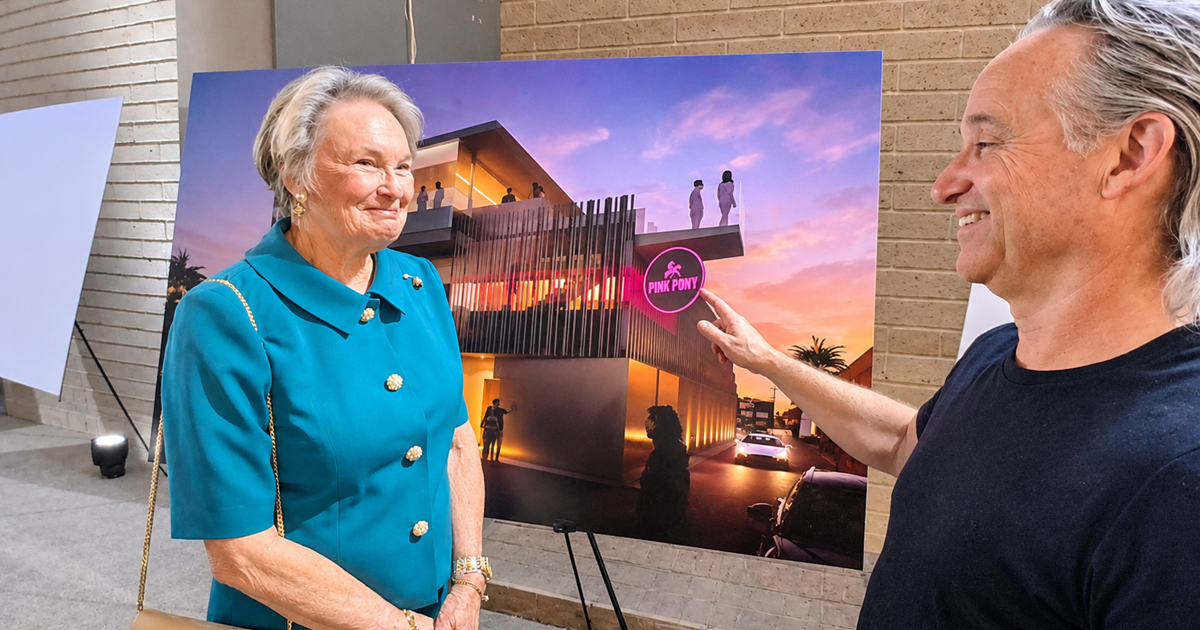
Camille Briley Hall, daughter of the legendary owner, is excited about plans to resurrect and vastly upgrade the long-closed Pink Pony. Architect Wendell Burnette showed off his plan. (Tom Scanlon/Managing Editor) It was almost like a Pink Pony reunion.Alongside several “regulars,” there was a beaming Camille Briley Hall, daughter of the Old Town legend who took the Pink Pony on a long ride to Scottsdale fame. The long-closed steakhouse was a favorite watering hole for locals as well as spring training superstars looking to quench their thirst after games at nearby Scottsdale Stadium.“My dad carried Billy Martin home one night,” Hall said with a giggle. One night back in the 1980s, the hard-nosed New York Yankees legend had a few too many at the Pony, “and we didn’t have Uber back then.” Charles “Charley” – his daughter notes he preferred that to the common “Charlie” – Briley passed away Dec. 17, 2002.
This excerpt comes from the named source. Read the original for the full reporting.
Read the original at East Valley Tribune


