Local
Olivia Rodrigo, a new Uptown, and ‘the’ premier franchise: Rick Schnall on the Hornets’ path ahead
A Roundtable is a way to meet new people and discuss this article in person at a local coffee shop or other venue.
Roundtables are designed for groups of four, with a shared subject and room for everyone to speak. Come for discussion, with no dating expectation.
Source: Arizona Business Daily
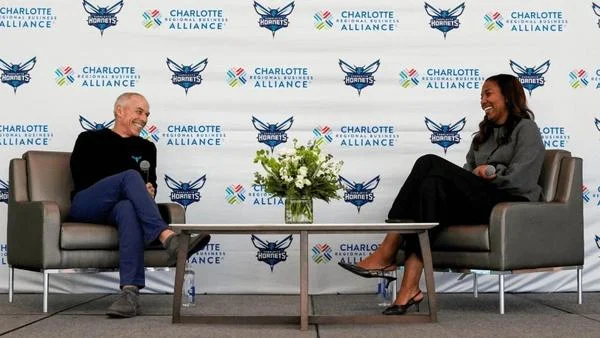
Charlotte Hornets Co-Chairman Rick Schnall told Charlotte Regional Business Alliance investors last week that he wants the team to help make Charlotte one of the best cities in the country, and that the work starts with a great downtown. Schnall joined Shelly Cayette-Weston, president of business operations for Hornets Sports & Entertainment, for a fireside conversation at the CLT Alliance’s November Investor Quarterly Meeting, held inside the newly renovated Spectrum Center. Noting that she’d never shared a stage with Schnall before, Cayette-Weston opened by framing the arena’s $245 million renovation as an investment in a community asset. Over the course of the conversation, Schnall covered his path to ownership, his friendship with Michael Jordan, the team’s plans for Uptown, and why he believes Charlotte holds the best growth opportunity in the NBA. From pickup to the boardroom Schnall grew up in Queens, playing pickup basketball on New York City courts.
This excerpt comes from the named source. Read the original for the full reporting.
Read the original at Arizona Business Daily



