Local
Ouzinkie solar project passes key test
A Roundtable is a way to meet new people and discuss this article in person at a local coffee shop or other venue.
Roundtables are designed for groups of four, with a shared subject and room for everyone to speak. Come for discussion, with no dating expectation.
Source: Kodiak Daily Mirror
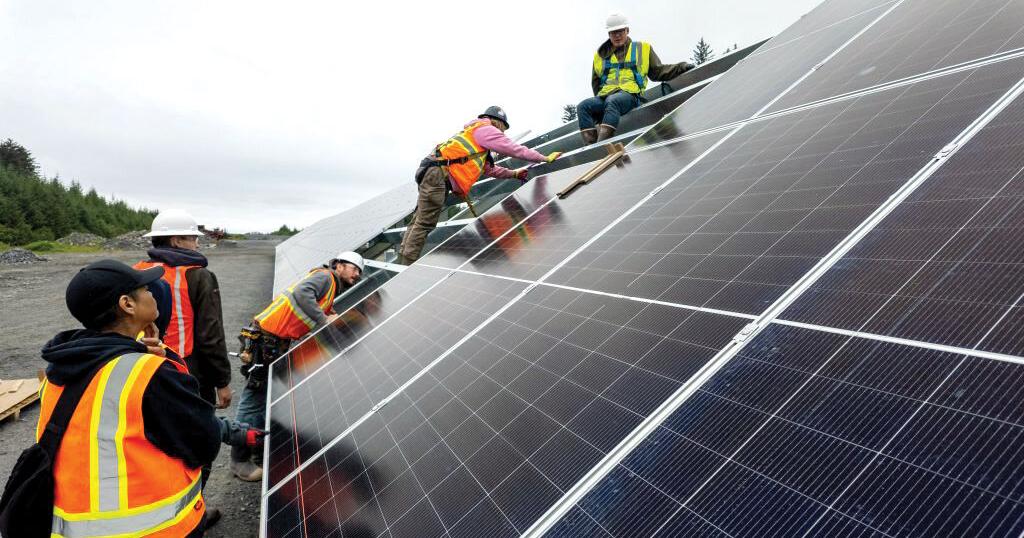
For 45 minutes on Nov. 15, the village of Ouzinkie went 100% solar electric. For the first time, it ran the community electrical system entirely on battery power, shutting down its diesel generators. It was a demonstration that the new village solar and battery system could keep the community of around 100 powered up without diesel generation, marking an important step toward more reliable power. It’s a milestone for the $3.6 million solar and battery project designed to reduce diesel use, lower energy costs and keep essential services operating during generator maintenance. The Alaska Native Tribal Health Consortium’s Division of Environmental Health and Engineering Rural Energy Program helped acquire funding and advance project development, engineering, procurement, construction coordination and commissioning. The project is being developed by the Native Village of Ouzinkie, with support from the Ouzinkie Native Corporation, Tribal Energy Alternatives and the City of Ouzinkie.
This excerpt comes from the named source. Read the original for the full reporting.
Read the original at Kodiak Daily Mirror


