Local
Palestinian journalist killed by Israel in Gaza wins prestigious Rory Peck prize
A Roundtable is a way to meet new people and discuss this article in person at a local coffee shop or other venue.
Roundtables are designed for groups of four, with a shared subject and room for everyone to speak. Come for discussion, with no dating expectation.
Source: Al-Monitor
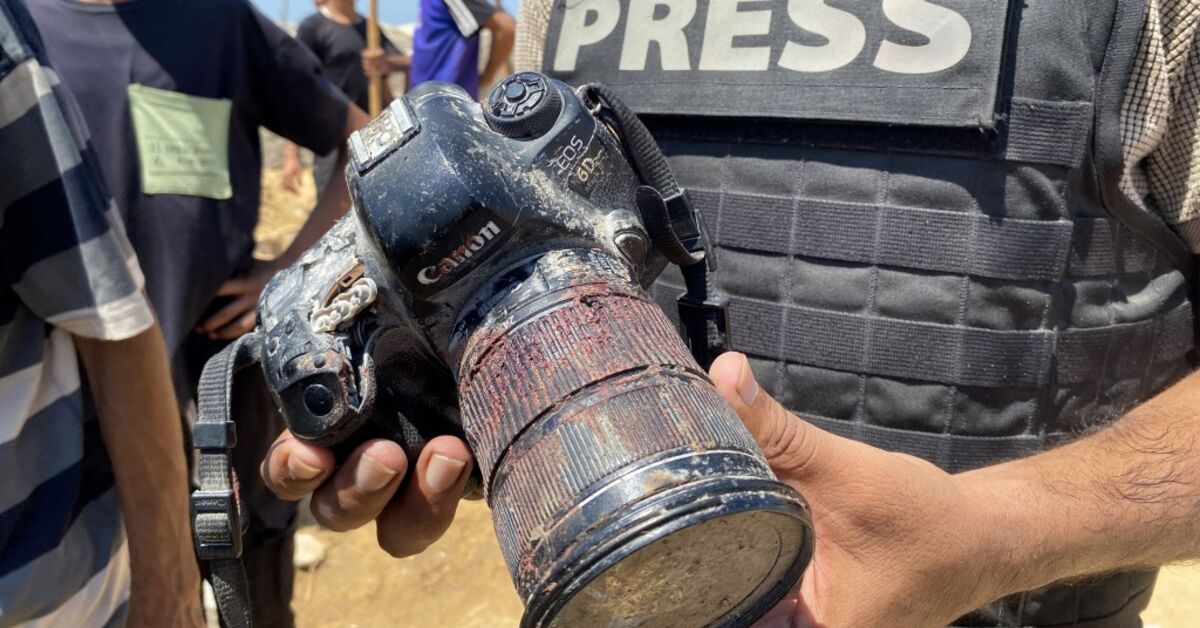
Agence France-Presse Nov 25, 2026 A journalist holds Palestinian war correspondent Mariam Dagga's blood-covered camera after she was killed in an Israeli strike in August 2025 — - Palestinian war correspondent Mariam Dagga, who was killed in Gaza in an Israeli strike last year, has posthumously won the prestigious Rory Peck prize for freelance video journalists, the organisers announced on Wednesday. She shares the award with two of her colleagues from the Associated Press (AP), Abdel Kareem Hana and Jehad Alshrafi, "for their powerful coverage of the human cost of the war" in the Palestinian territory, the Rory Peck Trust said. Dagga was 33 years old when she was killed in August 2025 in an Israeli air strike on a southern Gaza hospital, which claimed the lives of four other journalists. The independent photographer and reporter had been working with AP since the beginning of the war, sparked by Hamas's October 7, 2023 attack on Israel.
This excerpt comes from the named source. Read the original for the full reporting.
Read the original at Al-Monitor


