Local
Pope forgives person who nailed him in the eye with a rosary in Peru
A Roundtable is a way to meet new people and discuss this article in person at a local coffee shop or other venue.
Roundtables are designed for groups of four, with a shared subject and room for everyone to speak. Come for discussion, with no dating expectation.
Source: Devils Lake Journal
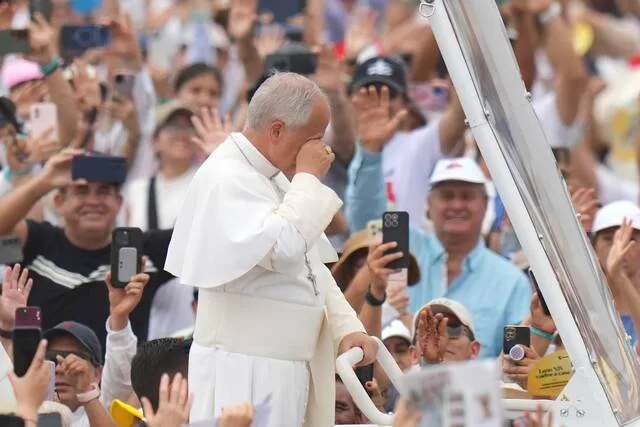
ABOARD THE PAPAL PLANE (AP, Nov. 17, 2026) — Pope Leo XIV has forgiven the person who threw a rosary that nailed him in the eye before his final Mass in Peru, saying it was merely a sign of the person’s profound faith. Leo got hit during a popemobile ride Monday through the estimated 1.5 million people who had flooded a Lima air base for the service. Leo grimaced and touched his eye but proceeded as if nothing had happened. During an in-flight press conference en route home, a Peruvian reporter apologized for the incident. Leo, who lived in Peru for two decades and has Peruvian citizenship, brushed it off as merely someone trying to get close to the pope. And he also joked about it. “The nice thing about Peruvians, including the person who with a lot of faith simply wanted to offer me a rosary, are things you carry in your heart – or maybe in your eye – but that mark the life of someone,” he said. “It tells you that here truly there is enthusiasm. Here there is profound faith.
This excerpt comes from the named source. Read the original for the full reporting.
Read the original at Devils Lake Journal


