Local
Portland and the Twin Cities Share Characteristics, but Their Growth Looks Very Different
Meet in Common connects news with real conversations. Use ThinkMatch to arrange a Roundtable and meet people to discuss this story.
Roundtables are designed for groups of four, with a shared subject and room for everyone to speak. Come for discussion, with no dating expectation.
Source: Urban Institute
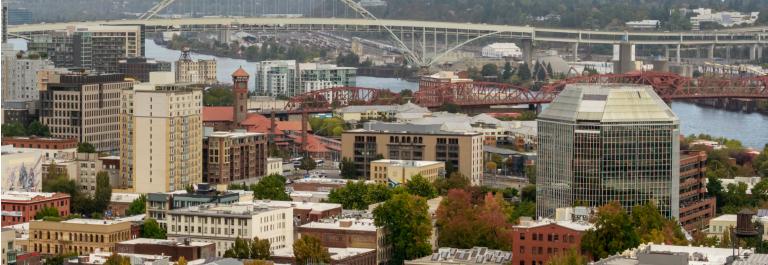
Over the past half century, the Minneapolis–St. Paul and Portland, Oregon, metropolitan areas have grown relatively quickly, each adding millions of residents. The two regions share some key characteristics: similar household incomes, poverty rates, and racial and ethnic composition. Today, about one-third of residents in both regions are people of color. But the two regions took very different approaches to accommodating their growth. In the Portland region, state, metropolitan, and local stakeholders directed much of this growth toward already developed, or infill, neighborhoods. In the Twin Cities, growth has largely spread outward. We analyze how these growth patterns have affected people’s lives (PDF) In the Twin Cities, residents drive more and travel longer distances, increasing pollution and transportation costs. Sprawl has been associated with increased social and racial segregation, whereas the Portland area remains more integrated.
This excerpt comes from the named source. Read the original for the full reporting.
Read the original at Urban Institute