Local
Professor Follows the Flow to Help Engineers Improve Future Aircraft
A Roundtable is a way to meet new people and discuss this article in person at a local coffee shop or other venue.
Roundtables are designed for groups of four, with a shared subject and room for everyone to speak. Come for discussion, with no dating expectation.
Source: Syracuse University News
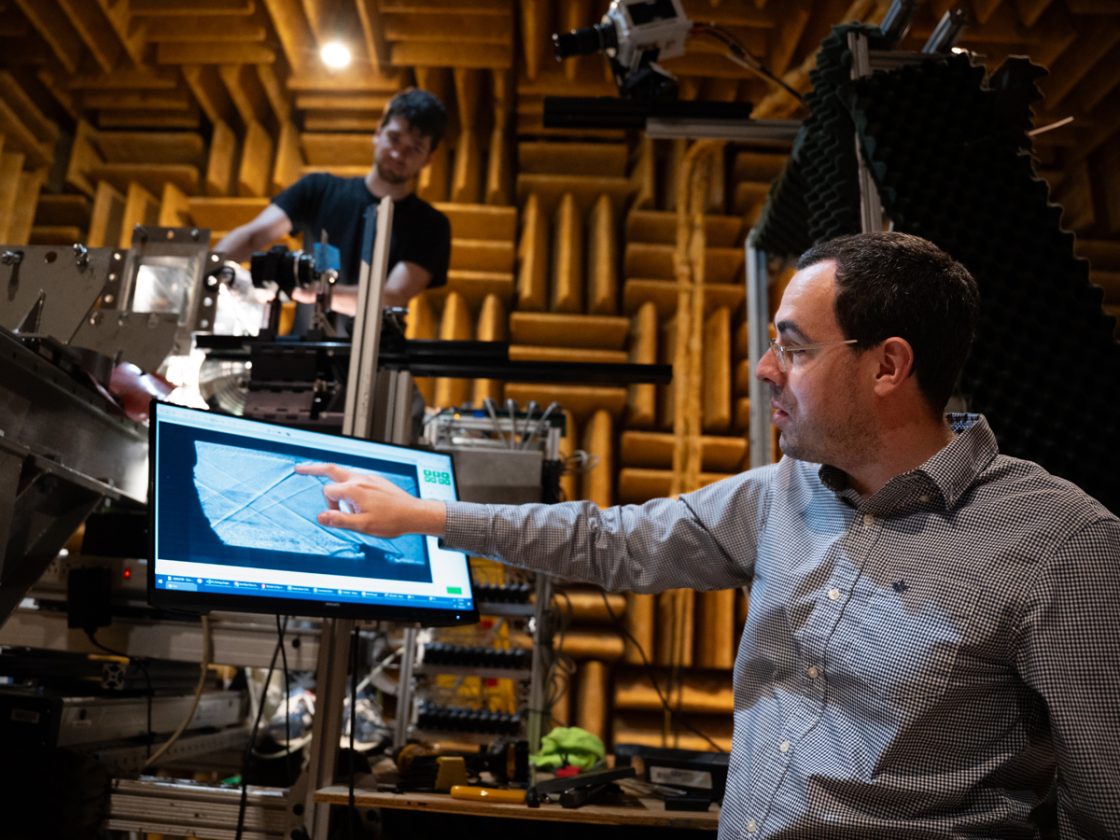
STEM Fernando Zigunov and Ph.D. candidate Mark Namatsaliuk set up a test section of the wind tunnel that simulates the effects of supersonic flow and the resulting turbulence on a flying vehicle. (Photo by Amy Manley) STEM Professor Follows the Flow to Help Engineers Improve Future Aircraft College of Engineering and Computer Science assistant professor Fernando Zigunov uses lasers and high-speed cameras to study supersonic turbulence, backed by Air Force funding. John Boccacino Nov. 17, 2026 Estimated Reading Time: Share × Video Player Imagine riding in a car with the windows rolled down and your arms extended out the window. As the car speeds up, your hand meets wind resistance that only intensifies at higher speeds. Now imagine that car is a plane, flying at speeds faster than sound. The air pushing against your hand becomes a rush of air along the entire aircraft, creating turbulence that is difficult to predict.
This excerpt comes from the named source. Read the original for the full reporting.
Read the original at Syracuse University News