Local
Property owners near new power line should get ready to haggle, says Becker County commissioner
A Roundtable is a way to meet new people and discuss this article in person at a local coffee shop or other venue.
Roundtables are designed for groups of four, with a shared subject and room for everyone to speak. Come for discussion, with no dating expectation.
Source: Detroit Lakes Tribune
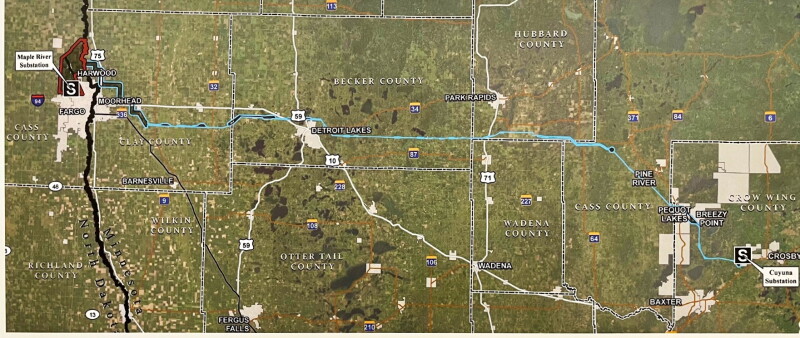
DETROIT LAKES — A final route permit has been filed for the 170-mile Maple River–Cuyuna (MR-C) Transmission Project, which will run through Becker, Hubbard and Clay counties, including north of Detroit Lakes. “So we have a proposed route we can talk about today,” Drew Janke, environmental compliance specialist with Minnesota Power, told the Becker County Board on Tuesday. Not surprisingly, the power line route largely follows the right-of-way for existing transmission lines along the bottom of Hubbard and Becker Counties, and south of Highway 10 through Clay County — until it loses the existing corridor east of Moorhead and has to blaze a new trail up towards the Fargo-area Maple River substation. The new project will largely run side-by-side with an existing transmission corridor, which means 120 to 130 feet of new right-of-way will be needed along most of the corridor.
This excerpt comes from the named source. Read the original for the full reporting.
Read the original at Detroit Lakes Tribune