Local
Residents wait, worry about proposed transmission line's route
A Roundtable is a way to meet new people and discuss this article in person at a local coffee shop or other venue.
Roundtables are designed for groups of four, with a shared subject and room for everyone to speak. Come for discussion, with no dating expectation.
Source: The Northern Virginia Daily
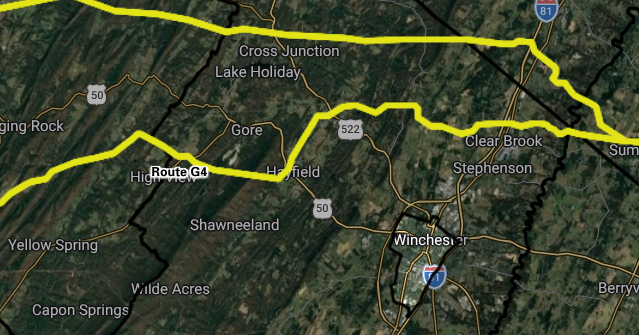
This map shows the two possible routes through Frederick County for the Valley North transmission line. Valley Link While Clarke County residents no longer have to worry about the Valley North transmission line running across their locality, as that route was scrapped, two routes are still being considered in Frederick County. One will be selected.The final route for the the proposed 260-mile, 765-kilovolt (kV) transmission line hasn't been determined.But it appears likely that privately-owned land in Frederick County will need to be acquired for it to be built. Valley North is a project of Valley Link Transmission Company LLC, a corporation formed through a partnership with Dominion Energy, Transource, and FirstEnergy Transmission. The line would start at the existing Amos substation in Putnam County, West Virginia, and run east through Frederick County, Virginia, before ending at the proposed Rocky Point substation in Frederick County, Maryland.
This excerpt comes from the named source. Read the original for the full reporting.
Read the original at The Northern Virginia Daily


