Local
Saharan dust carries African bacteria across the Atlantic to the Amazon rainforest, study finds
A Roundtable is a way to meet new people and discuss this article in person at a local coffee shop or other venue.
Roundtables are designed for groups of four, with a shared subject and room for everyone to speak. Come for discussion, with no dating expectation.
Source: Meteored United States
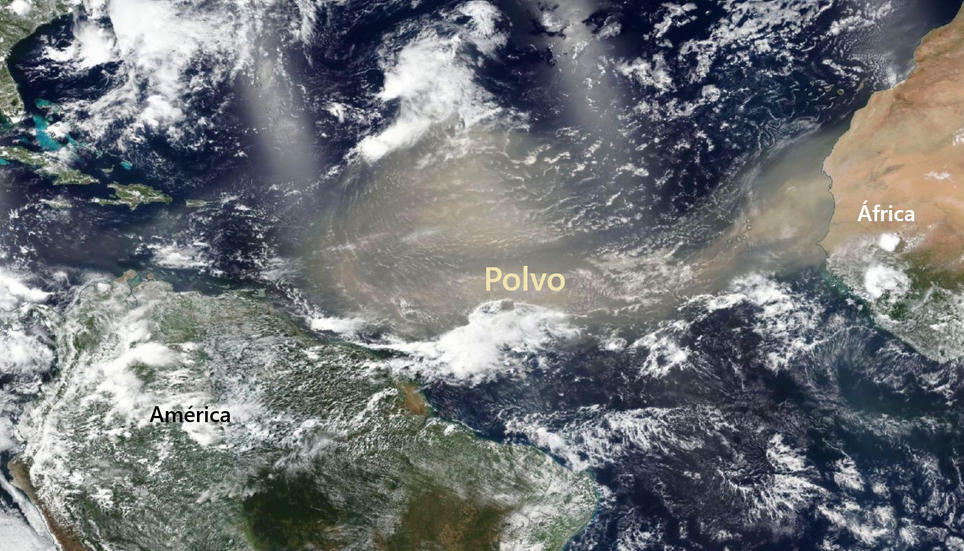
According to a new study, the bacterial composition of the air changes significantly when dust clouds from Africa reach the Amazon rainforest. Viewed under a microscope, the air above the Amazon rainforest is teeming with activity. It is full of pollen, fungal spores, tiny plant particles and bacteria. Normally, the composition of this bioaerosol community is relatively stable. A team comprising researchers from the University of Graz, the Max Planck Institute for Chemistry in Mainz and collaborating Brazilian institutions has demonstrated that microorganisms are transported across the Atlantic alongside dust from the Sahara Desert. According to the study, published in the journal Communications Earth & Environment, the bacterial composition of the air changes significantly when dust clouds from Africa reach the Amazon rainforest. However, the composition of fungal spores in the Amazonian air remains virtually unchanged.
This excerpt comes from the named source. Read the original for the full reporting.
Read the original at Meteored United States