Local
Schumer accuses Nvidia (NVDA) CEO Jensen Huang of breaking export law. Blanche calls Nvidia a good corporate citizen
A Roundtable is a way to meet new people and discuss this article in person at a local coffee shop or other venue.
Roundtables are designed for groups of four, with a shared subject and room for everyone to speak. Come for discussion, with no dating expectation.
Source: AIStockWire
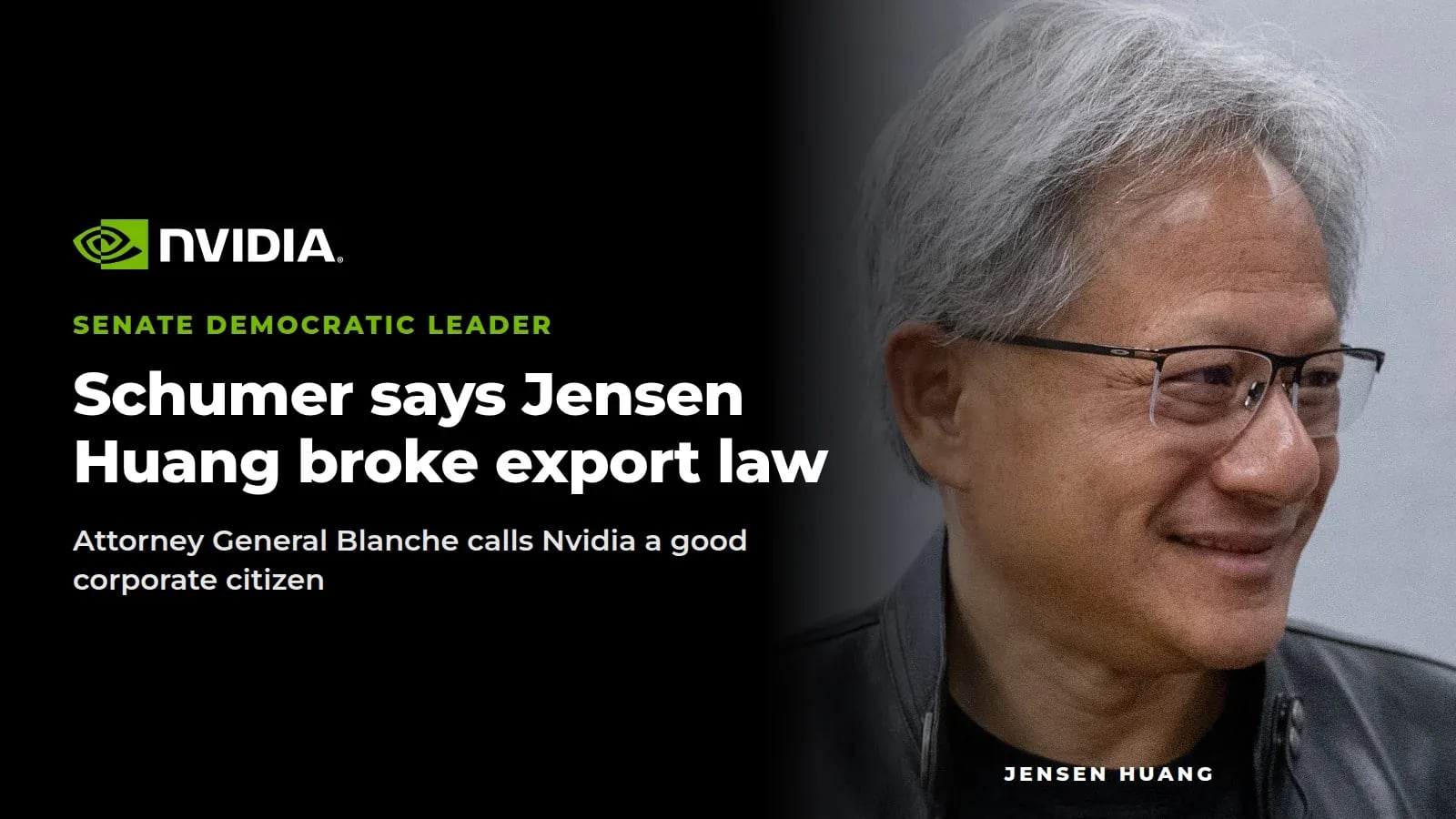
Key points Chuck Schumer's export-law charge against Jensen Huang What Todd Blanche said about Nvidia at the Justice Department Where Jensen Huang faces Congress next Senate Democratic leader Chuck Schumer accused Nvidia (NVDA) CEO Jensen Huang on Tuesday of violating US export control law, a day after Huang returned to run the chipmaker. Earlier in the day, Attorney General Todd Blanche called Nvidia a good corporate citizen and declined to say what the Justice Department had found about Huang. "A critical national security threat in the Nvidia situation is that Jensen Huang shipped extremely advanced chips to China, violating US export control law, in what amounts to the equivalent of selling rocket engines to the Soviets during the Space Race," Schumer wrote on X at 12:59 p.m. ET. He called it "an unfathomable failure of enforcement by the Trump administration" and said Congress needs to pass the bipartisan export control bills he has worked on with Sen. Elizabeth Warren.
This excerpt comes from the named source. Read the original for the full reporting.
Read the original at AIStockWire



