Local
Scientists discover quasar formed within a mere 630 million years of the Big Bang, setting a record
A Roundtable is a way to meet new people and discuss this article in person at a local coffee shop or other venue.
Roundtables are designed for groups of four, with a shared subject and room for everyone to speak. Come for discussion, with no dating expectation.
Source: The Seattle Times
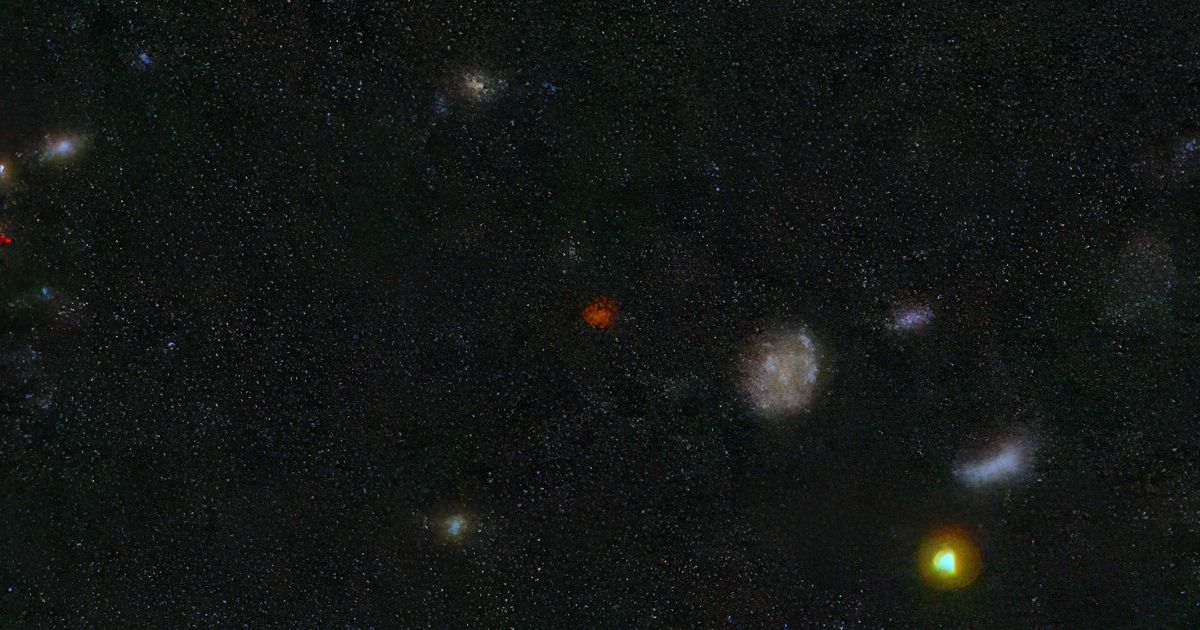
By MARCIA DUNN The Associated Press CAPE CANAVERAL, Fla. (AP) — Scientists have discovered the most distant quasar yet, the core of a galaxy with a slow-chomping black hole at its center dating back to nearly the dawn of the universe.The quasar formed within 630 million years of the universe-forming Big Bang, a German-led team reported Tuesday. That’s considered a very early development in the 13.8 billion-year history of the cosmos, and it smashes previous records. “This time the leap in cosmic time is huge!” the European Southern Observatory’s Julien Wolf, who led the study, said in an email. “The previous two records each took us back by about 15 million years or less. This one takes us back by nearly 40 million years, the biggest advance in nearly a decade!”Wolf and his team spotted the quasar while digging through millions of observations made by the European Space Agency’s Euclid telescope.
This excerpt comes from the named source. Read the original for the full reporting.
Read the original at The Seattle Times

