Local
Small-town Iowa case shows how scenario planning can steer rural energy
A Roundtable is a way to meet new people and discuss this article in person at a local coffee shop or other venue.
Roundtables are designed for groups of four, with a shared subject and room for everyone to speak. Come for discussion, with no dating expectation.
Source: Bioengineer.org
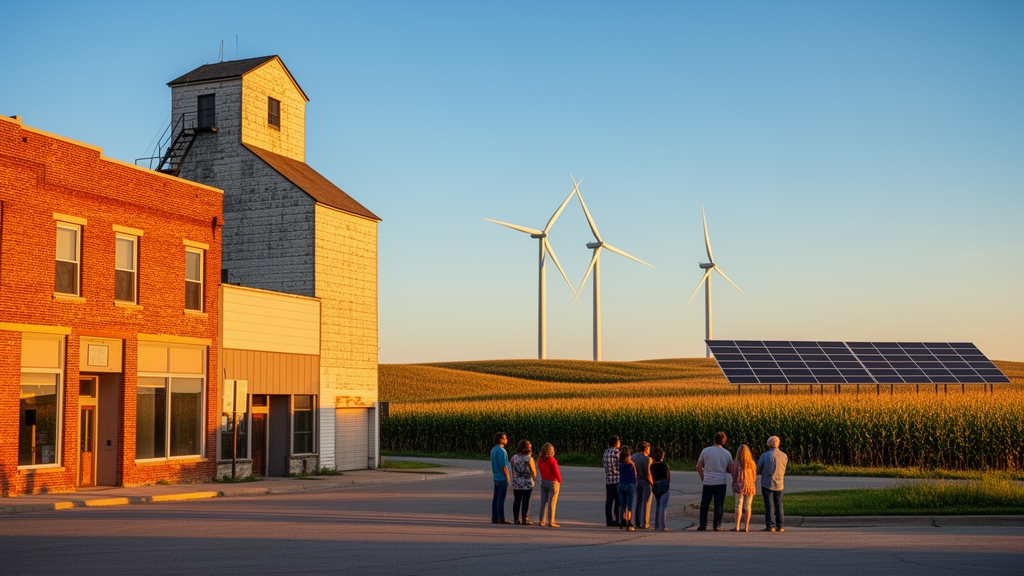
Published in Frontiers of Urban and Rural Planning, the study by Jiwnath Ghimire and Eyad Taamallah used exploratory scenario planning to build four alternative energy futures for Algona, co-created with residents, the municipal utility, and local stakeholders. The central finding is striking for its modesty: the community preferred small-scale, flexible energy options, particularly building-integrated photovoltaics paired with energy efficiency, and the authors argue those preferences can be leveraged to build momentum toward larger transitions rather than forcing an all-or-nothing bet on any single technology. Algona is a useful test case precisely because it mirrors pressures felt across the rural Midwest. The city’s population slipped from 5,494 in 2013 to 5,414 in 2025, with a median age of 43.1 years, and its Hispanic population grew from 1.4 percent in the 2010 Census to 6.3 percent in 2020.
This excerpt comes from the named source. Read the original for the full reporting.
Read the original at Bioengineer.org