Local
Sore knees? Take a look at your hips
A Roundtable is a way to meet new people and discuss this article in person at a local coffee shop or other venue.
Roundtables are designed for groups of four, with a shared subject and room for everyone to speak. Come for discussion, with no dating expectation.
Source: Fairfax County Times
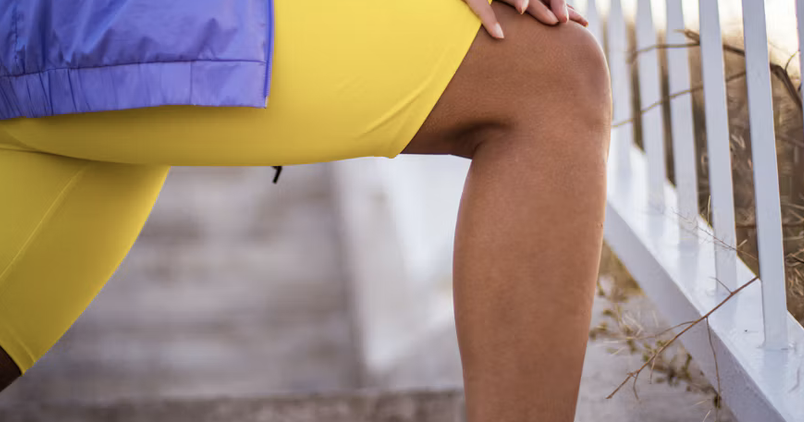
Unsplash When a client tells me their knees hurt, I usually start by watching their hips. That surprises a lot of people. The knee is where the ache shows up, so it seems like the knee must be the problem. But the knee is mostly a hinge. It bends and straightens, and it goes where the bones above and below it send it. Very often, the joint doing the steering is the hip.Here is what tends to happen. The muscles on the outside and back of your hip, mainly your glutes, help keep your thigh lined up when you stand, walk, climb stairs, or get out of a chair. When those muscles get weak or lazy, the thigh can drift inward with each step. The knee follows, caving in toward the other leg. Do that thousands of times a day and the knee ends up taking strain it was never built to handle alone. Long hours of sitting make this worse. Desk work, driving, and evenings on the couch leave the front of the hips tight and the glutes underused.
This excerpt comes from the named source. Read the original for the full reporting.
Read the original at Fairfax County Times