Local
Strike back to stop the drive to war
A Roundtable is a way to meet new people and discuss this article in person at a local coffee shop or other venue.
Roundtables are designed for groups of four, with a shared subject and room for everyone to speak. Come for discussion, with no dating expectation.
Source: Socialist Worker
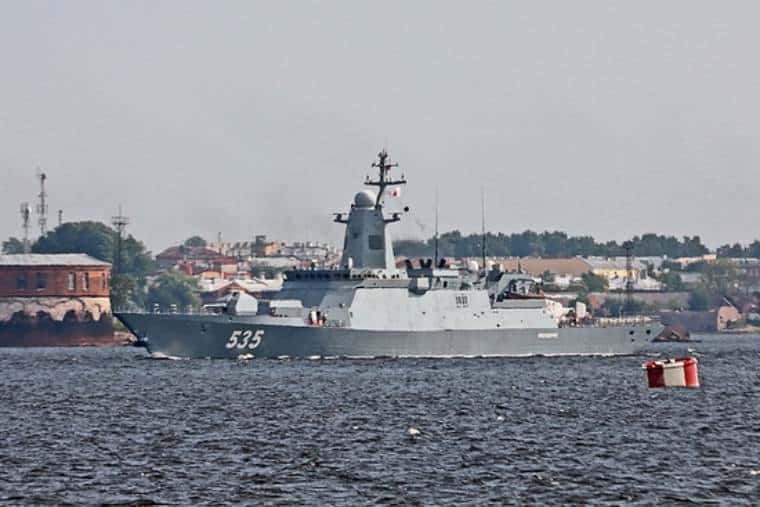
Ukraine said its drones sank the Merkury while it was docked in Libya (Pic: Wikimedia commons) The war in Ukraine took another dangerous turn this week as it spread to the Mediterranean. Ukrainian president Volodymyr Zelensky said its drones sank one of Russia’s newest warships, the Merkury, and hit a transport vessel, the Angara, at a Libyan port. An Iranian-linked cargo ship was reportedly also damaged during the strikes. Meanwhile, the mainstream media is pushing the idea that Donald Trump is “pro-Russian” after he met with the Chinese and Russian presidents, Xi Xinping and Vladimir Putin, last week. Trump is not motivated by support for Putin. He is desperate to claim a win after the US was humiliated in the war on Iran—a war that cost the Republican Party the midterm elections. By appearing at the summit, Trump could be the “great statesman” without agreeing anything beyond vacuous words about “peace”. He wants an end to the war in Ukraine to focus on China.
This excerpt comes from the named source. Read the original for the full reporting.
Read the original at Socialist Worker


