Local
Students Secretly Recorded in All-Gender Showers
Meet in Common connects news with real conversations. Use ThinkMatch to arrange a Roundtable and meet people to discuss this story.
Roundtables are designed for groups of four, with a shared subject and room for everyone to speak. Come for discussion, with no dating expectation.
Source: The Stanford Review
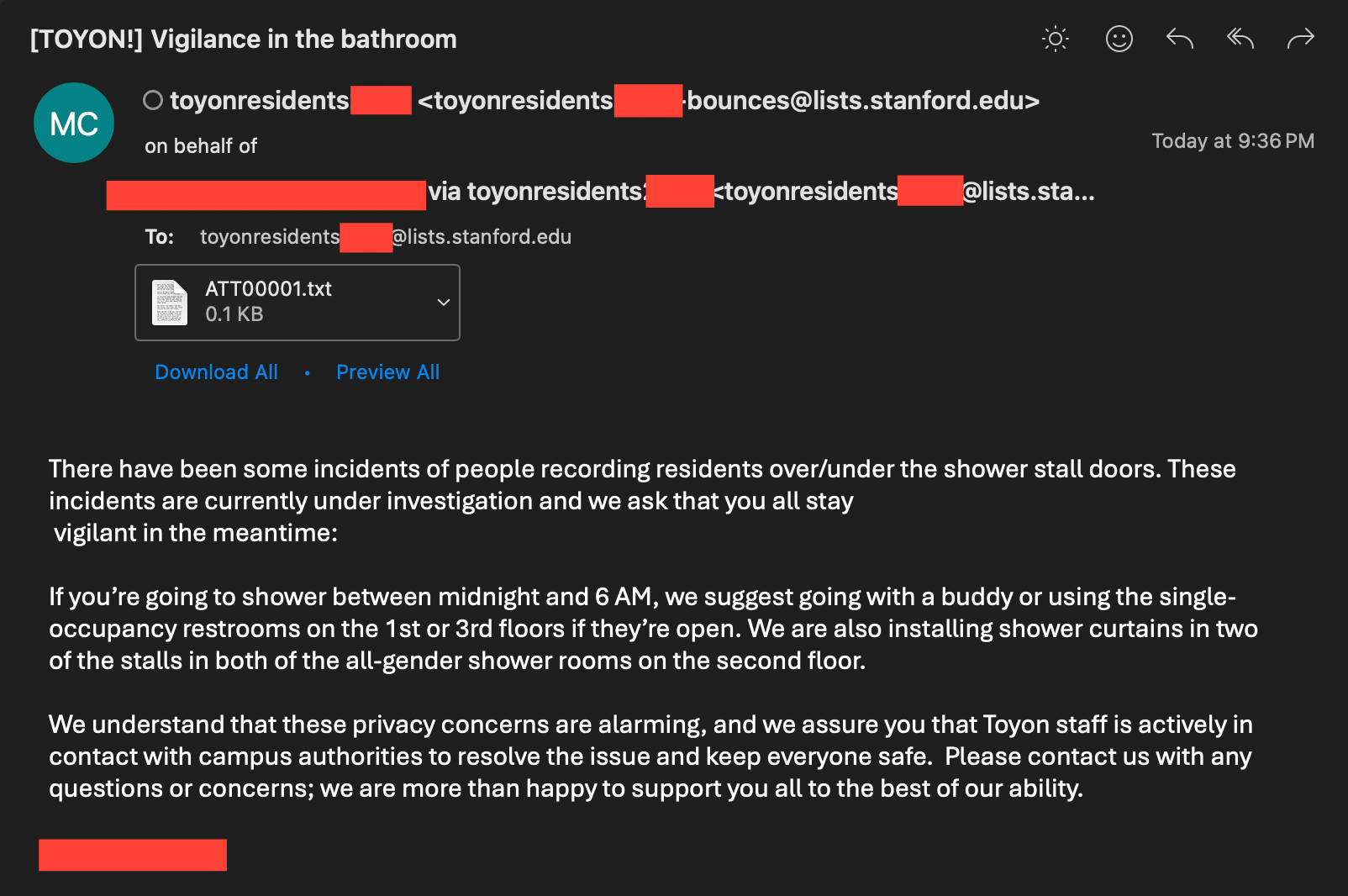
Students at Stanford’s Toyon Dorm were alerted that numerous residents have been recorded in shower stalls without their consent. The perpetrator(s) have not been caught; students were told to remain “vigilant” while these events are investigated. The Resident Fellow advised students not to use bathrooms alone between midnight and 6 AM; instead, they should travel in groups of two, employing a buddy system. The statement issued by Toyon's Resident Fellow is as follows: “There have been some incidents of people recording residents over/under the shower stall doors. These incidents are currently under investigation, and we ask that you all stay vigilant in the meantime: If you're going to shower between midnight and 6 AM, we suggest going with a buddy or using the single-occupancy restrooms on the 1st or 3rd floors if they're open.
This excerpt comes from the named source. Read the original for the full reporting.
Read the original at The Stanford Review