Local
Supreme Court faces new questions over trans rights and equal protection
A Roundtable is a way to meet new people and discuss this article in person at a local coffee shop or other venue.
Roundtables are designed for groups of four, with a shared subject and room for everyone to speak. Come for discussion, with no dating expectation.
Source: Washington Blade
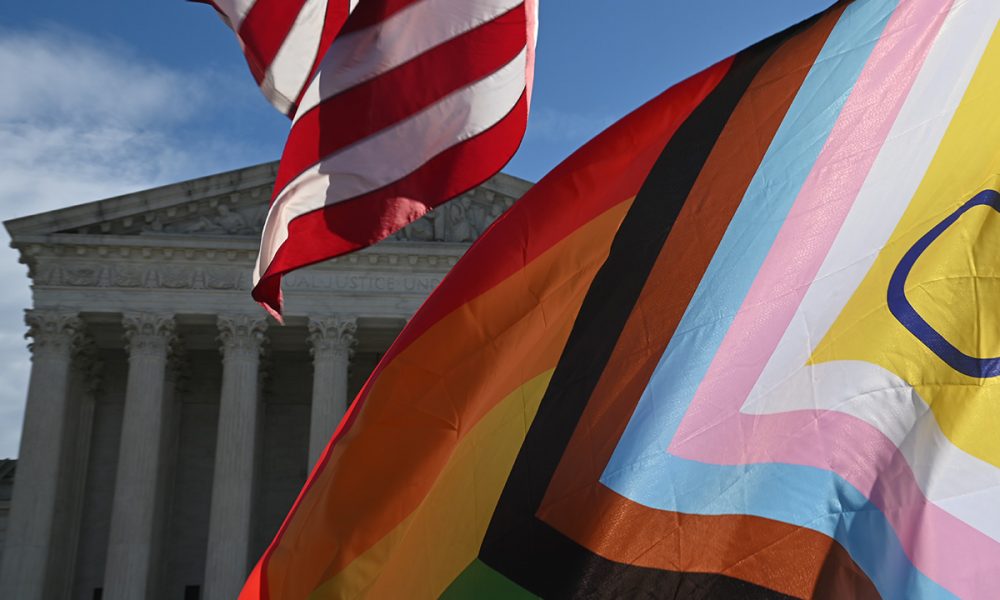
The U.S. Supreme Court has taken action in one case and is being asked to review another, two legal challenges that could have significant implications for transgender people in the United States, including those incarcerated in state prisons and serving in the U.S. military. The cases, Roybal v. Griffith and Talbott v. USA, involve separate challenges to policies affecting trans people. Both raise questions about equal protection under the Constitution and the extent to which the government can impose restrictions based on trans identity. Roybal v. Griffith Roybal v. Griffith involves Darlene Griffith, a trans woman who was incarcerated in an El Paso County, Colo., prison in 2020. Griffith, who was assigned male at birth, was forced to be held in a men’s prison despite identifying as a trans woman. She was also denied access to woman’s undergarments and strip-searched by a male officer, despite requesting a female officer. On Nov.
This excerpt comes from the named source. Read the original for the full reporting.
Read the original at Washington Blade