Local
Surgeon Operates California Robot From Remote Guyana Village Using
Meet in Common connects news with real conversations. Use ThinkMatch to arrange a Roundtable and meet people to discuss this story.
Roundtables are designed for groups of four, with a shared subject and room for everyone to speak. Come for discussion, with no dating expectation.
Source: Bioengineer.org
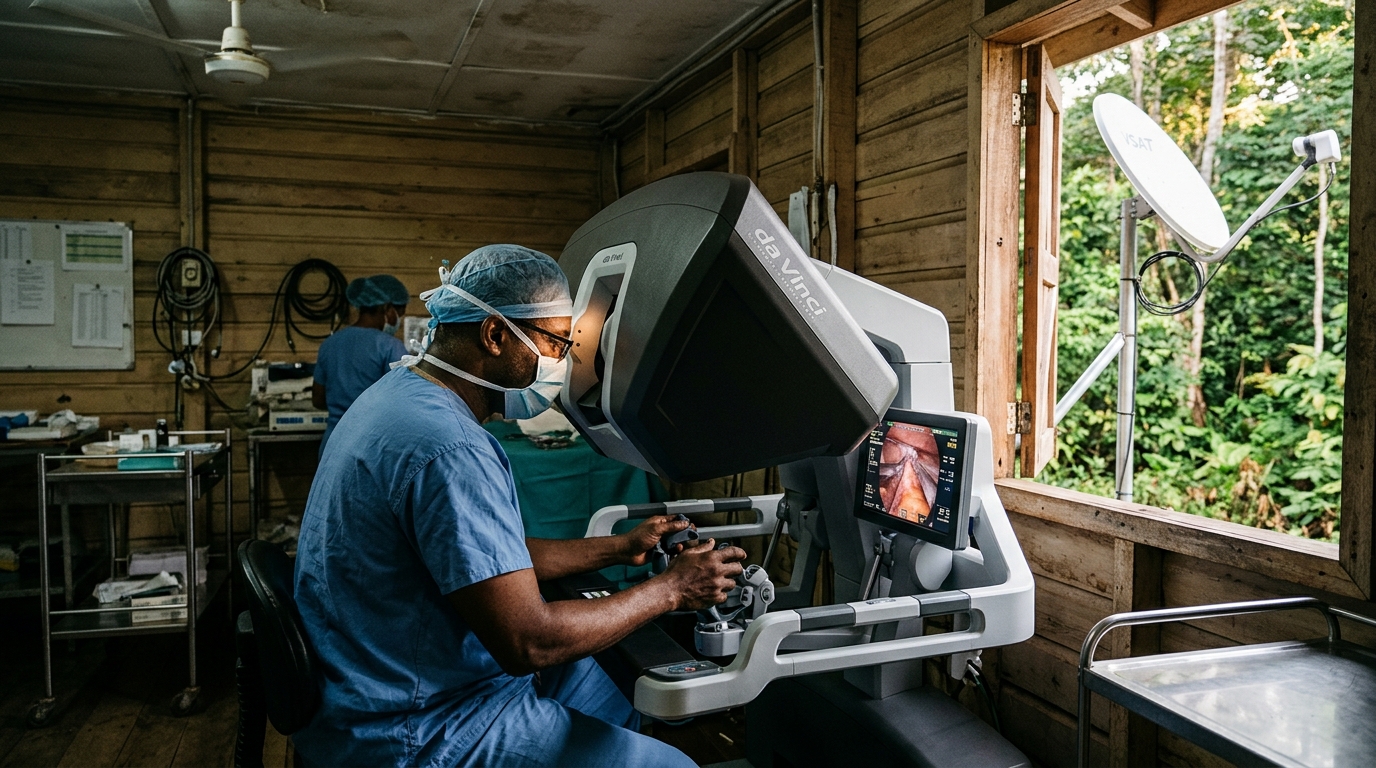
A surgical research team has successfully performed intercontinental robotic telesurgery trials connecting an austere, remote village in South America to a robotic surgical platform located thousands of miles away in the United States. Operating from a rural community situated along the Pomeroon River in Guyana, a fellowship-trained general surgeon manipulated a dual-armed surgical robot stationed in Menlo Park, California, using a compact virtual reality console and a commercial mobile satellite internet link. The field demonstration confirmed that complex surgical maneuvers can be teleoperated across continents from an off-grid environment lacking cellular coverage and municipal electricity. The system relied entirely on lightweight, man-portable control equipment that had been transported through dense waterways in a single standard backpack.
This excerpt comes from the named source. Read the original for the full reporting.
Read the original at Bioengineer.org