Local
Syracuse men’s basketball crumbles in second half against No. 13 St. John’s
A Roundtable is a way to meet new people and discuss this article in person at a local coffee shop or other venue.
Roundtables are designed for groups of four, with a shared subject and room for everyone to speak. Come for discussion, with no dating expectation.
Source: The NewsHouse
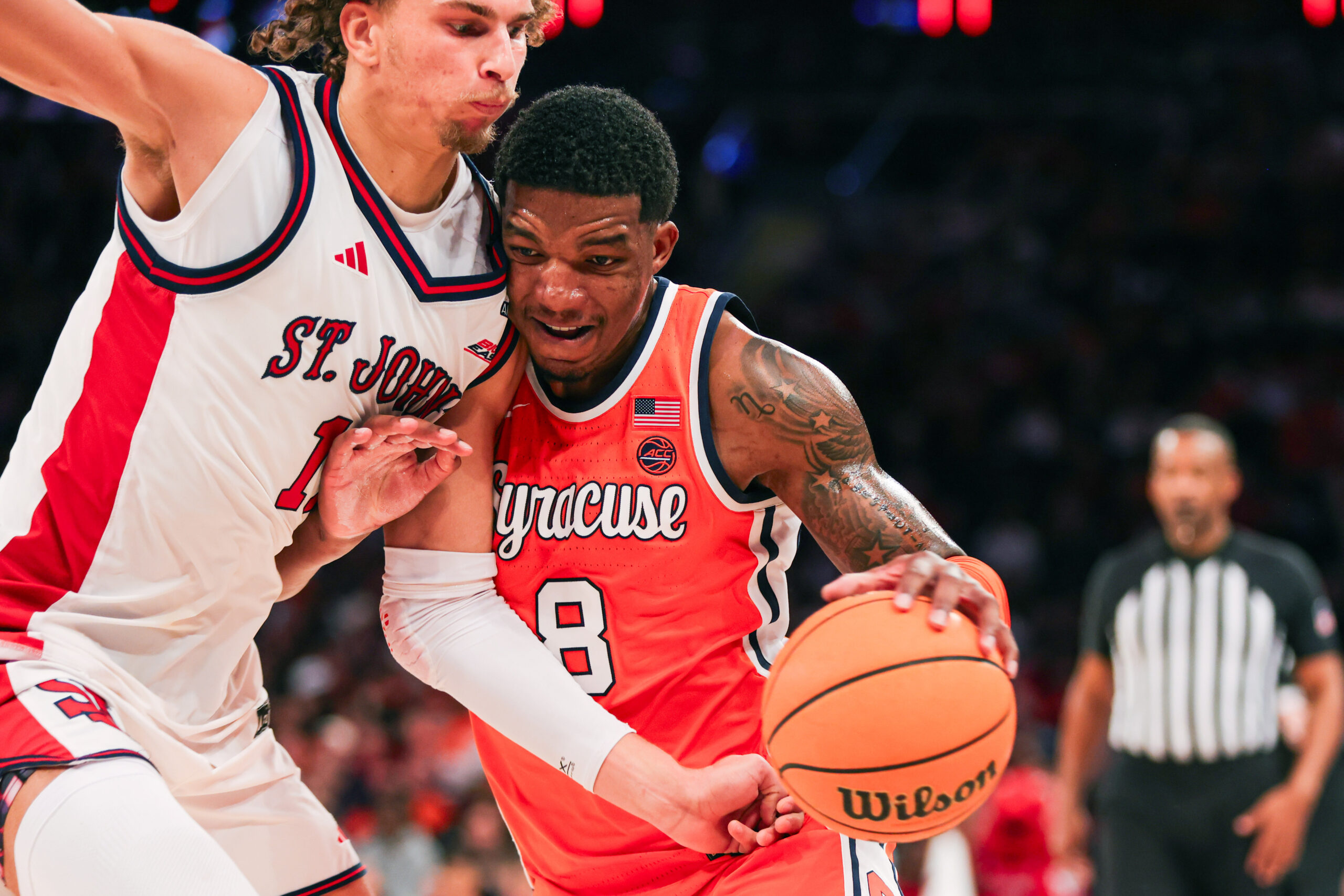
skip to main content Go to homepage" Main Website Logo This is the Hamburger/Menu icon Basketball Syracuse men’s basketball crumbles in second half against No. 13 St. John’s SU men’s basketball surrenders halftime lead, loses 79-62 to St. John’s Orange notch second straight loss after a 16-0 flipped the script at Madison Square Garden Story by Jake Klein / Photos by Brody Shuffler Published: November 16, 2026 Photo by Brody Shuffler Syracuse forward Amarri Monroe drives to the basket against St. John’s on Nov. 15, 2026, at Madison Square Garden in New York, NY. NEW YORK — At halftime of Syracuse men’s basketball’s return to the world’s most famous arena on Sunday, Madison Square Garden was Eden for SU fans again. The Orange took a three-point lead into the break against an old Big East foe, and seemed on the precipice of the first marquee win under head coach Gerry McNamara.
This excerpt comes from the named source. Read the original for the full reporting.
Read the original at The NewsHouse


