Local
Tara Dew shares love of God with ministry wives
A Roundtable is a way to meet new people and discuss this article in person at a local coffee shop or other venue.
Roundtables are designed for groups of four, with a shared subject and room for everyone to speak. Come for discussion, with no dating expectation.
Source: The Alabama Baptist
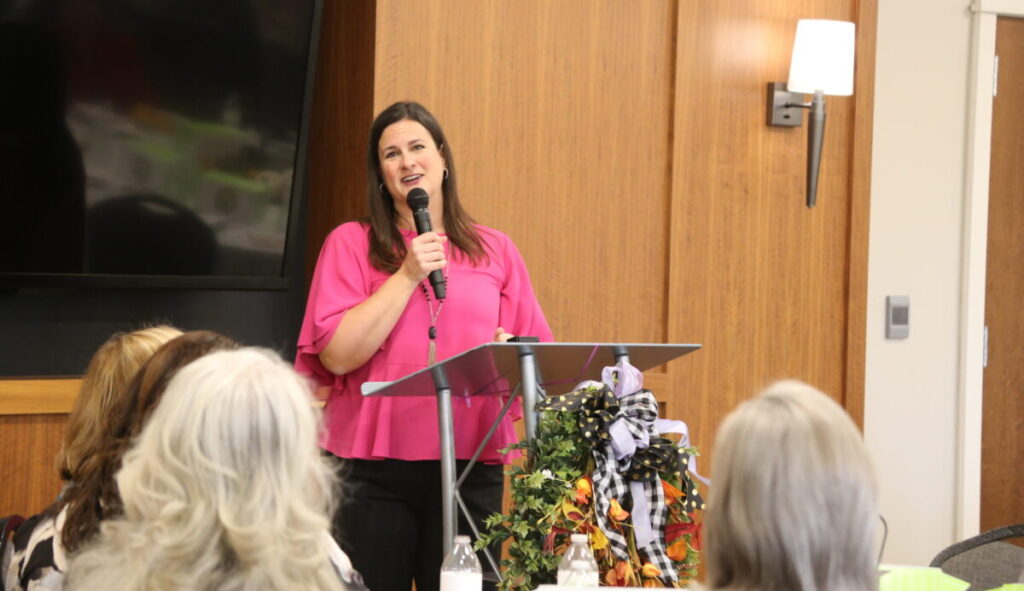
Tara Dew — an author, speaker and Bible teacher — was the keynote speaker at the Alabama WMU ministry wives luncheon on Nov. 17 at First Baptist Church Trussville during the 2026 Alabama Baptist State Convention. “I love Alabama,” said Dew, wife of New Orleans Baptist Theological Seminary (NOBTS) President Jamie Dew. “Y’all have been such sweet, dear partners to Jamie and me since we moved to the Gulf Coast seven years ago.” At NOBTS, Tara Dew teaches in the Ministry to Women program and leads Thrive, a certificate program for ministry wives. A complex calling Dew recalled the early days of ministry when her husband led a small country church. During her initial interview, the very first question she was asked was, “Do you play piano?” Already feeling she didn’t look or sound like a traditional pastor’s wife, she changed her outfit five times, battling feelings of inadequacy. This is just one example of the complexity of being the wife of a ministry leader.
This excerpt comes from the named source. Read the original for the full reporting.
Read the original at The Alabama Baptist


