Local
The National Forests With The Most Pygmy Rattlesnakes
A Roundtable is a way to meet new people and discuss this article in person at a local coffee shop or other venue.
Roundtables are designed for groups of four, with a shared subject and room for everyone to speak. Come for discussion, with no dating expectation.
Source: WorldAtlas
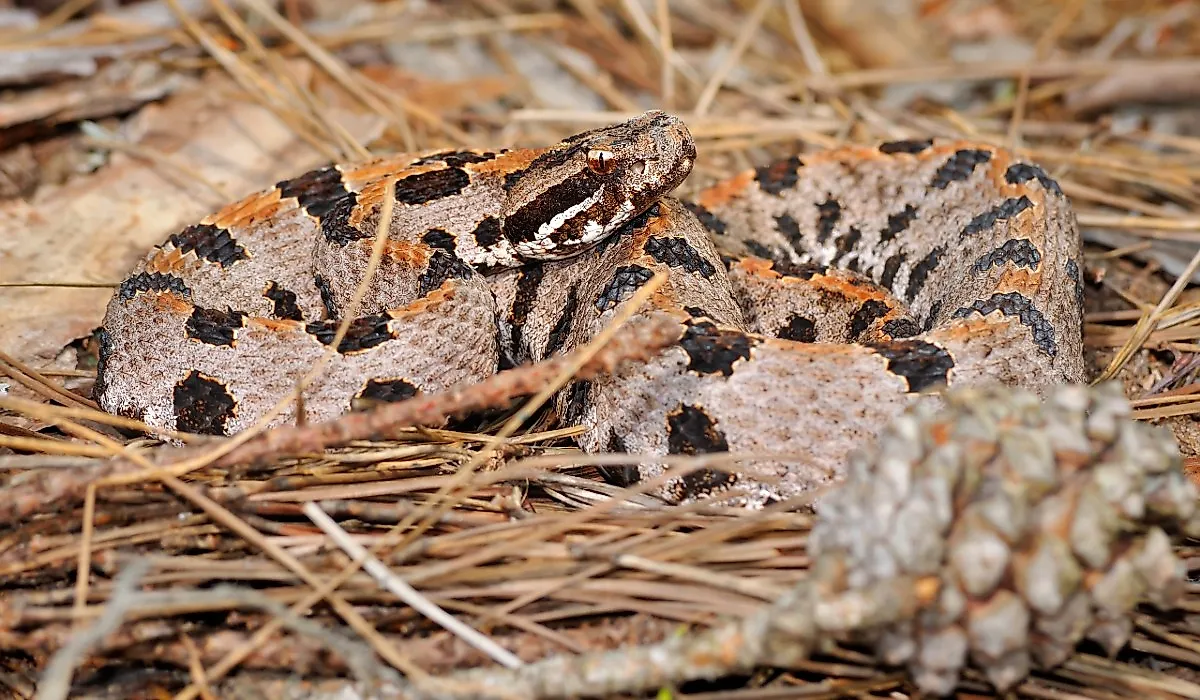
In Ocala National Forest, a rattlesnake can be barely a foot long, with a warning buzz quiet enough to mistake for an insect. The dusky pygmy rattlesnake lives here among the scrub and wetlands, sharing the forest with the much larger eastern diamondback. Florida's national forests protect extensive stretches of its habitat, including the wet savannas of Apalachicola and the swamp margins of Osceola. Across the state, pygmies are among the most frequently encountered venomous snakes, and populations can be locally abundant. Low pine woods give way to ponds and marshes, with ground cover where a small snake can remain concealed. Even an adult usually measures only 12 to 24 inches. Ocala National Forest, Florida Ocala's sand pine scrub grows on deep, sandy ground between the Ocklawaha and St. Johns rivers. Several hundred lakes interrupt the forest, and wetland vegetation occupies lower ground among the dry uplands.
This excerpt comes from the named source. Read the original for the full reporting.
Read the original at WorldAtlas


