Local
The S&P 500 entered a correction. Here's what happened after 26 earlier ones
A Roundtable is a way to meet new people and discuss this article in person at a local coffee shop or other venue.
Roundtables are designed for groups of four, with a shared subject and room for everyone to speak. Come for discussion, with no dating expectation.
Source: AIStockWire
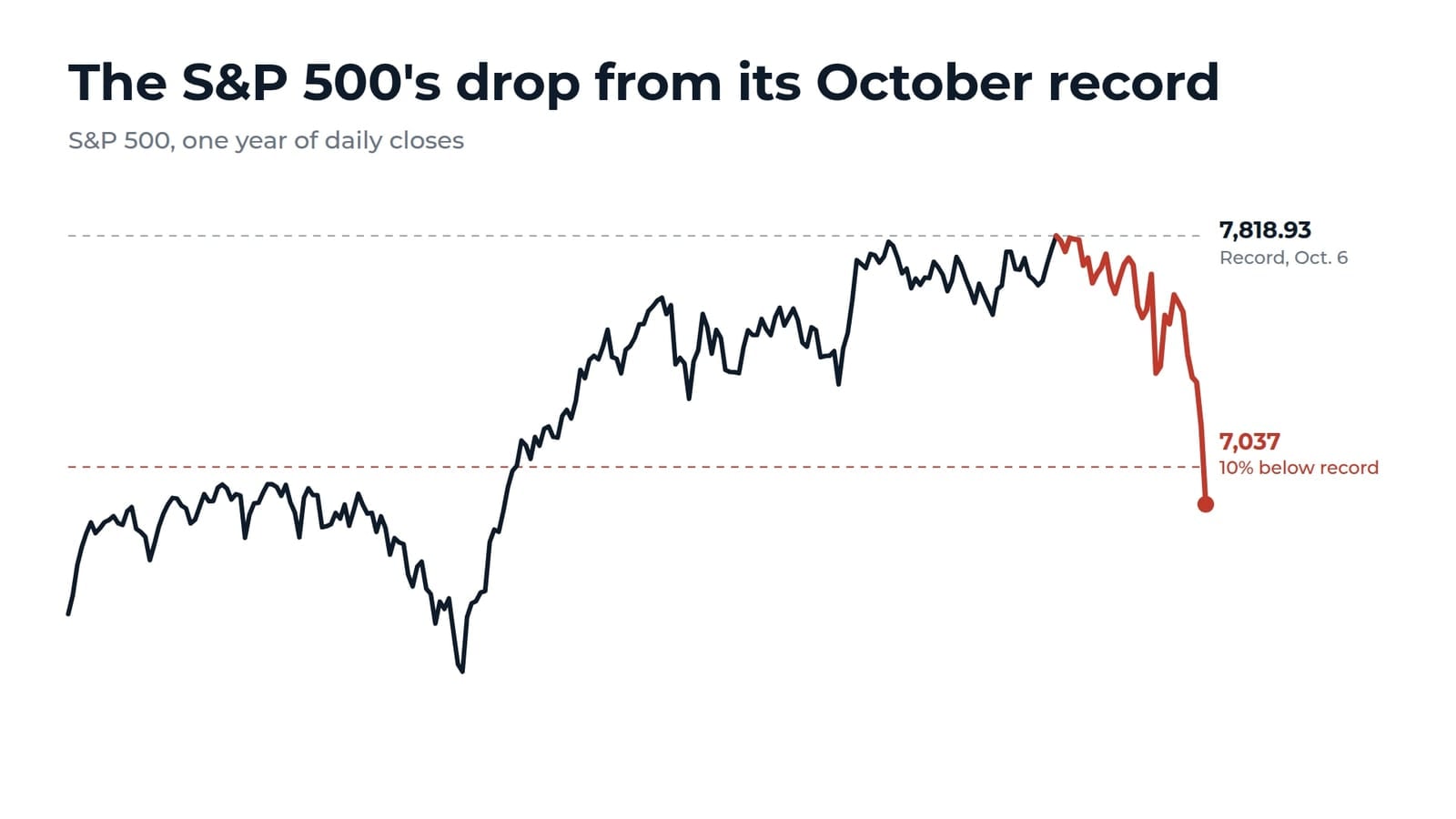
Key points The S&P 500 was higher six months after 18 of 26 corrections Twelve of the S&P 500's 26 corrections became bear markets within a year, before a new record The Dow also closed in a correction, its second of 2026 The S&P 500 entered a correction on Nov. 20, closing 11.6% below its October record. History offers investors a mixed picture of what could come next. I went through S&P 500 closes back to 1928 and found 26 earlier corrections from record highs, counting a new one only after the index had set another record. The index was higher six months later in 18 of them, with a median gain of 5.7%. But 12 of the 26 became bear markets within 252 trading days, or about a year, before the index reached another record. The S&P 500 fell 3.7% on Nov. 20 to close at 6,910.39. Its record close was 7,818.93 on Oct. 6, and it had closed 8.2% below that level on Nov. 19. A correction is generally a decline of at least 10% from a recent high, which for the S&P 500 was about 7,037.
This excerpt comes from the named source. Read the original for the full reporting.
Read the original at AIStockWire


