Local
Trapped below a Maryland dam and driven upstream by tank truck, 1,670 American shad reached Pennsylvania release points in a single spring, against a restoration goal of two million fish passing the last dam
A Roundtable is a way to meet new people and discuss this article in person at a local coffee shop or other venue.
Roundtables are designed for groups of four, with a shared subject and room for everyone to speak. Come for discussion, with no dating expectation.
Source: EcoPortal.net
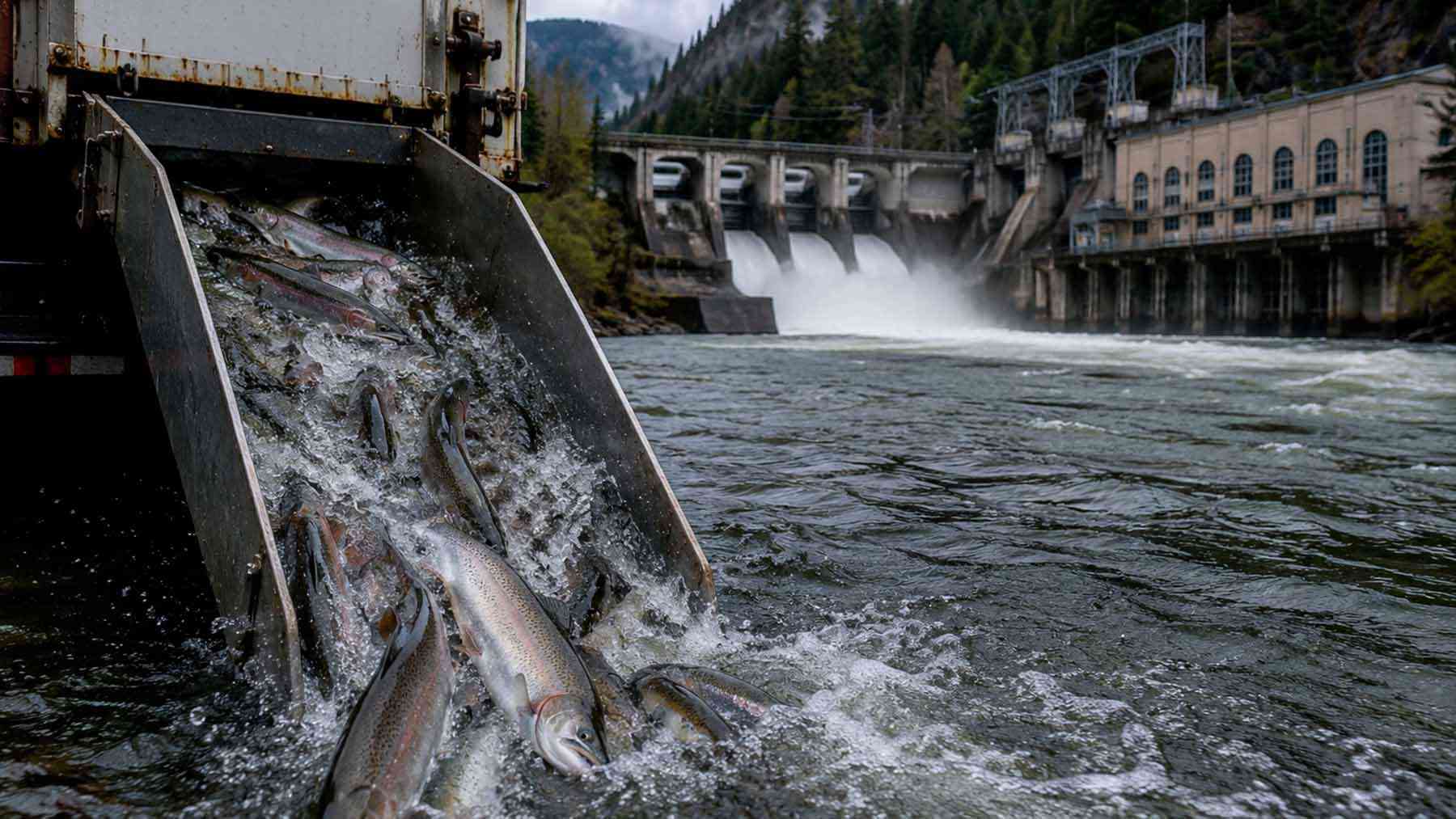
A hopper lifts clear of the river at the foot of a concrete wall. Inside it, silver fish thrash, each about the length of a forearm. Workers sort the catch species by species. The American shad go into a tank of cool, circulated water on the back of a truck. There is no open route around the dam by water, so these fish will finish the trip by road. Which raises the obvious question: why can’t they swim it? A 94 foot wall forces fish onto a truck American shad spend most of their lives in the ocean and return to the river where they hatched to spawn. On the Susquehanna, that run meets concrete. Four hydroelectric dams stand between the Chesapeake Bay and the river’s historic spawning reaches, and the lowest of them, Conowingo in Maryland, rises 94 feet. Engineers answered that wall with mechanical lifts that scoop fish from the tailrace and hoist them over the top. The lifts still collect fish, but they no longer simply tip them into the pool above the dam.
This excerpt comes from the named source. Read the original for the full reporting.
Read the original at EcoPortal.net


