Local
Trump Administration Continues to Delay “DEI” Research Grants, STEM Professors Talk Impacts
A Roundtable is a way to meet new people and discuss this article in person at a local coffee shop or other venue.
Roundtables are designed for groups of four, with a shared subject and room for everyone to speak. Come for discussion, with no dating expectation.
Source: The Wesleyan Argus
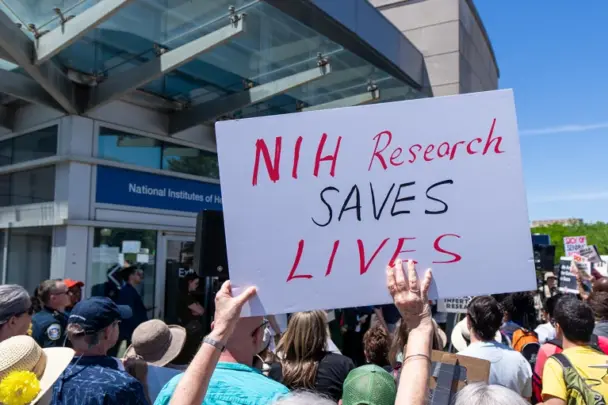
The University receives roughly 52% of its research funding from federal government grants, according to reports by the National Science Foundation (NSF), despite not being a public institution. These grants come from federal agencies such as the National Institutes of Health (NIH), NSF, and NASA, to name a few. This year, the Trump administration has requested cutting the NIH budget by 41%. The proposal would cut research to about $27.9 billion. Congress blocked these cuts and enacted the default NIH budget of around $48.5 billion. Still, the second Trump administration has seen changes to grant policies, processes, and the total number of grants awarded by federal agencies. Some policy changes made by the NIH in response are in an effort to save costs and provide budget flexibility as grantmakers are uncertain about how the budget will look in the future.
This excerpt comes from the named source. Read the original for the full reporting.
Read the original at The Wesleyan Argus