Local
Tupelo Solutions Circles: Nov. 17, 2026
A Roundtable is a way to meet new people and discuss this article in person at a local coffee shop or other venue.
Roundtables are designed for groups of four, with a shared subject and room for everyone to speak. Come for discussion, with no dating expectation.
Source: Mississippi Free Press
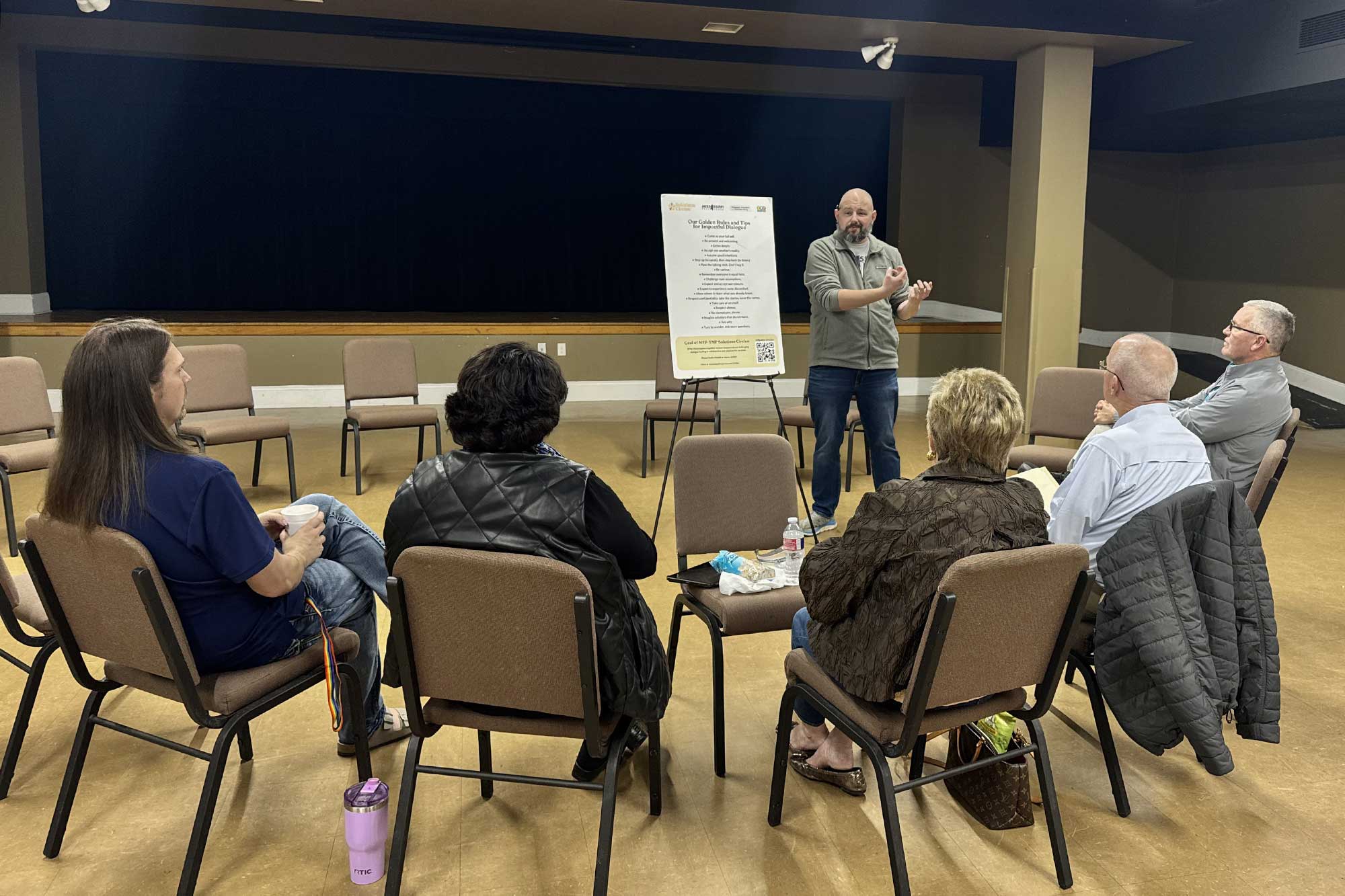
The Mississippi Free Press is committed to fostering dialogue across race, ethnicity, economic status, political parties, gender and religious beliefs. MFP’s Solutions Circles help provide a platform for these conversations where Mississippians can not only address challenges but also imagine solutions. For the first time, MFP convened a Tupelo Solutions Circle in Tupelo, Mississippi, on Nov. 17, 2026, at the Link Centre. The participants discussed homelessness and housing affordability. You can read more about our prior Solutions Circles here. Homelessness Problems In need of treatment with nowhere to go. Why? “Fight or Flight”/”survival” mode overrides longterm thinking Mental health needs Don’t meet “criteria” Being turned away. (Short term) Buck gets passed. Hospital discharged unhoused patient without treatment. Professionals – Lay people aren’t qualified Police calls at Salvation Army People brought from nearby communities Unhoused viewed as nuisance to be removed.
This excerpt comes from the named source. Read the original for the full reporting.
Read the original at Mississippi Free Press