Local
UA Mathematicians react to AI solving Millennium problems
A Roundtable is a way to meet new people and discuss this article in person at a local coffee shop or other venue.
Roundtables are designed for groups of four, with a shared subject and room for everyone to speak. Come for discussion, with no dating expectation.
Source: uatrav.com
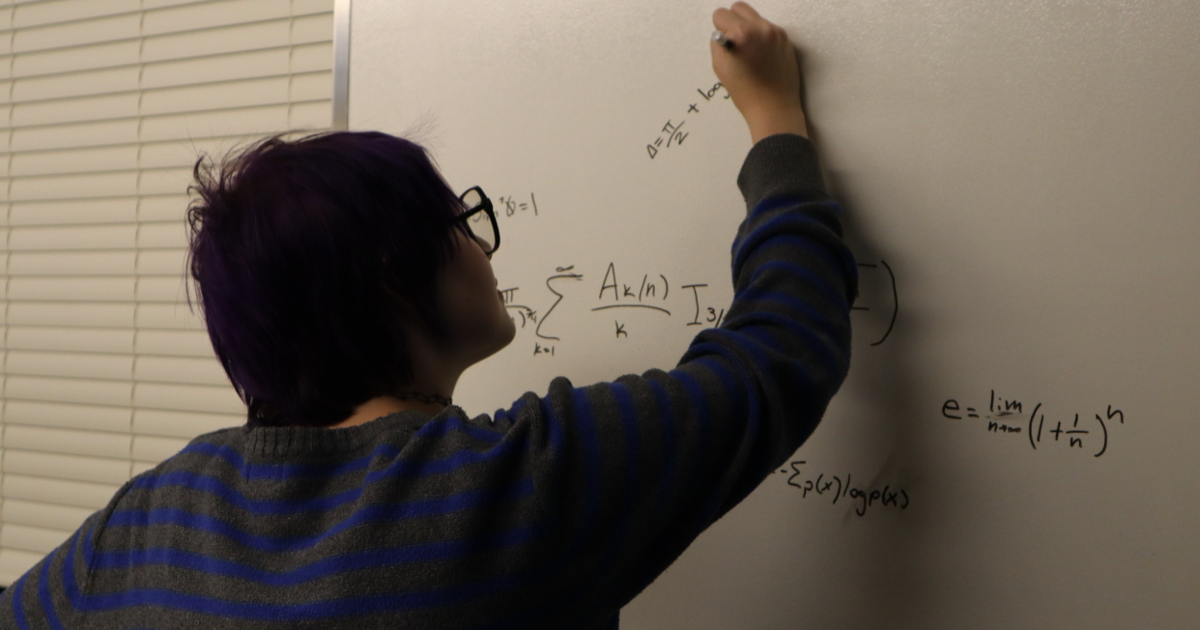
UA student Lyla works on math homework in Hotz Honors Hall. Oct. 31, 2026. David Culver // Staff Photographer OpenAI announced Sept. 8 that an advanced version of its GPT-6 model produced a solution to one of math’s famous Millennium problems. The generated proof raised concerns among UA mathematicians about what it might mean for the future of their discipline. The Millennium Prize Problems, designated by the Clay Mathematics Institute, are a collection of questions representing the most pressing topics facing mathematics this century. The specific problem, which involves the Navier–Stokes equation, a tool used to understand fluid motion, addresses whether those equations have solutions where a physically reasonable flow can have places that effectively “blow up,” creating flow of unbounded speed, which is not physically possible. OpenAI’s proof, which found an instance where this happened, is accompanied by a Lean formalization that academics worldwide are currently dissecting.
This excerpt comes from the named source. Read the original for the full reporting.
Read the original at uatrav.com