Local
UM language programs raise red flags over program review
A Roundtable is a way to meet new people and discuss this article in person at a local coffee shop or other venue.
Roundtables are designed for groups of four, with a shared subject and room for everyone to speak. Come for discussion, with no dating expectation.
Source: Montana Kaimin
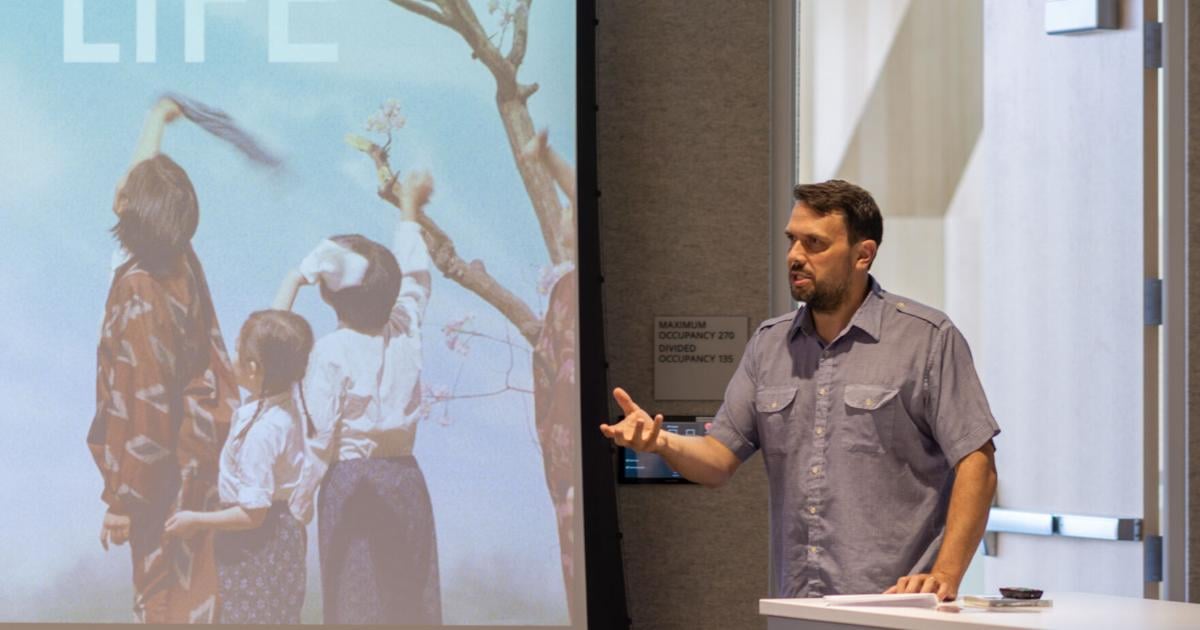
Brian Dowdle, Japanese language and culture professor at the University of Montana, prepares movie viewers at the Missoula Public Library for a film about re-imagining death in 2022. Chris Lodman / Montana Kaimin Archive The University of Montana’s language programs have started to push back against a review from the Office of the Commissioner of Higher Education, which listed eight University of Montana programs that may be cut earlier in the semester.“I don’t think there would be an easy way for the University to cut Japanese language and studies,” Japanese professor Brian Dowdle said. “It’s part of the identity here.” Programs on the list, like Japanese, Russian and previously German, were put there due to low numbers in three categories: current headcount, percentage change over the past three years and the number of graduating students.In the case of the Japanese major, enrollment dropped 70% over the past three years, from 23 students to just seven.
This excerpt comes from the named source. Read the original for the full reporting.
Read the original at Montana Kaimin


