Local
‘Unimaginable’ speeder sentenced to 19 years in prison
A Roundtable is a way to meet new people and discuss this article in person at a local coffee shop or other venue.
Roundtables are designed for groups of four, with a shared subject and room for everyone to speak. Come for discussion, with no dating expectation.
Source: Standard Blade
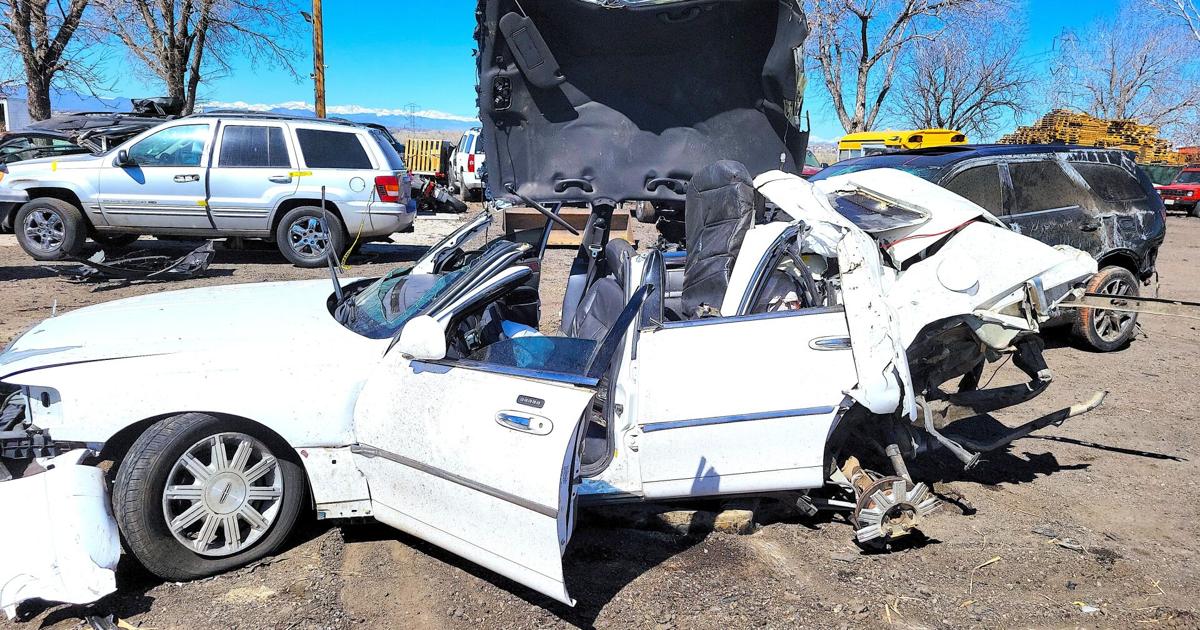
The broken remains of a car hit by a 24-year-old driving at 156 miles per hour along Brighton’s Gun Club Road in March 2025. The driver was sentenced Nov. 6 to 19 years after speeding along a two-lane road and hitting and paralyzing another driver. Courtesy Adams County A 24-year-old was sentenced to 19 years in the Colorado Department of Corrections on Friday for causing a car crash in Brighton that left another man with severe injuries, including paralysis.Justin Duran pled guilty to first-degree assault, extreme indifference on Aug. 26, 2026 in Adams County District Court. Adams County District Court Judge Toni Wehman sentenced Duran to prison on Nov. 6.At 8:45 p.m. on Friday, March 21, 2025, Duran was driving a 2021 Dodge Durango SRT east on 152nd Avenue near Gun Club Road in Brighton.
This excerpt comes from the named source. Read the original for the full reporting.
Read the original at Standard Blade


