Local
University Symphony Orchestra’s Halloween Concert Delights Community
A Roundtable is a way to meet new people and discuss this article in person at a local coffee shop or other venue.
Roundtables are designed for groups of four, with a shared subject and room for everyone to speak. Come for discussion, with no dating expectation.
Source: The Chicago Maroon
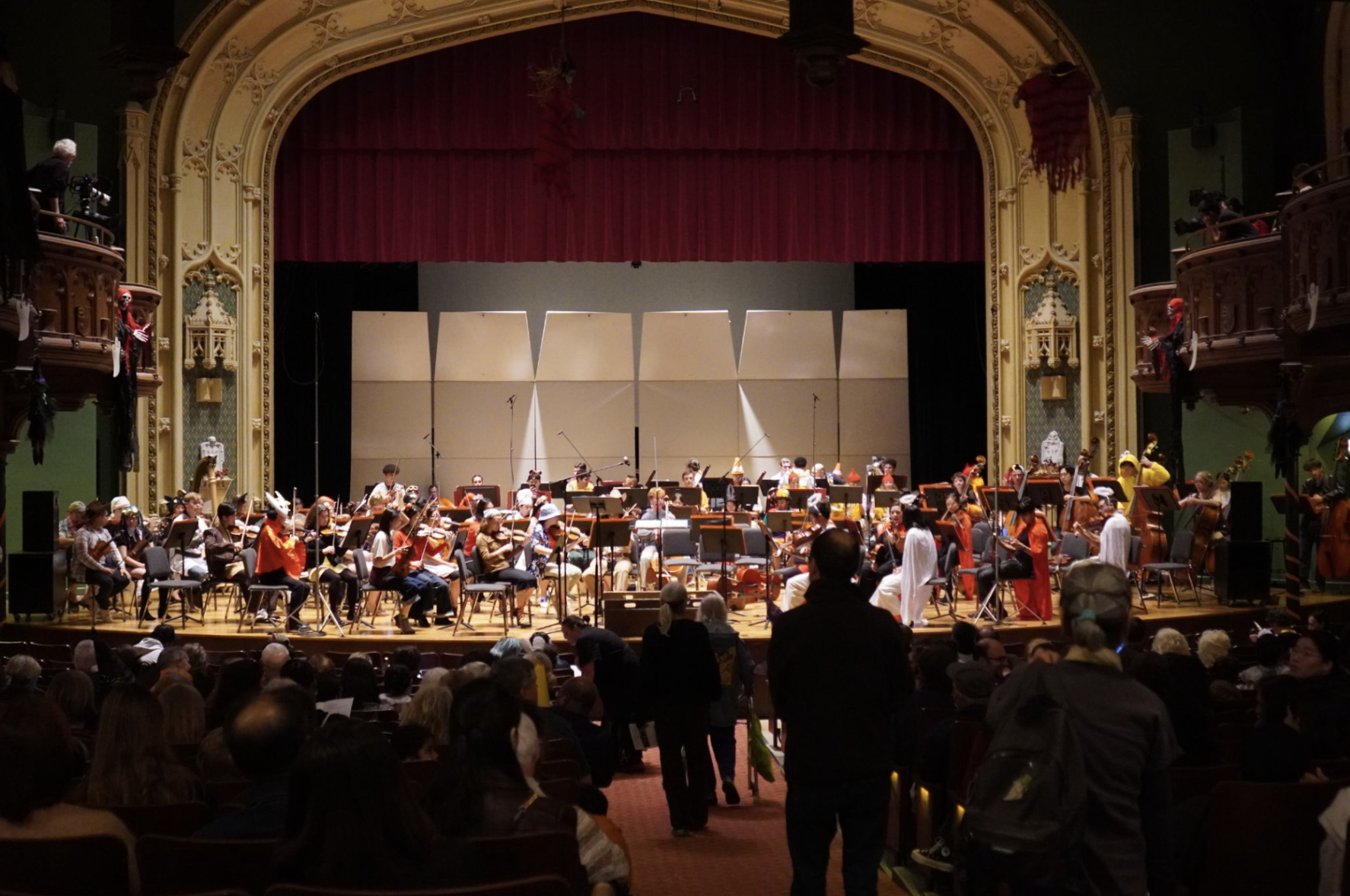
Roughly 100 UChicago students got together in late October dressed up in costumes––not to party or go trick-or-treating, but to play classical music. They played in the University Symphony Orchestra’s annual Halloween concert, which also featured members of the University’s choral ensembles and students from the Hyde Park School of Dance, a local performance nonprofit. The concert, which opens the orchestra’s season every fall, is known for catering to patrons of all ages. Not only do the musicians dress up in their festive disguises, but Mandel Hall also puts up spooky, albeit kitschy, decor. Even the orchestra’s austere conductor, Barbara Schubert, dons glittery makeup and a costume of her own. “Not everybody can sit for an hour and listen to classical music if they’ve never done so before, so I try very hard to program serious music, but do it with an extra flair,” Schubert said in an interview with the Maroon. This year’s concert certainly achieved Schubert’s goal.
This excerpt comes from the named source. Read the original for the full reporting.
Read the original at The Chicago Maroon


