Local
Up in flames: The growing threat and economic toll of U.S. wildfires
A Roundtable is a way to meet new people and discuss this article in person at a local coffee shop or other venue.
Roundtables are designed for groups of four, with a shared subject and room for everyone to speak. Come for discussion, with no dating expectation.
Source: Meteored United States
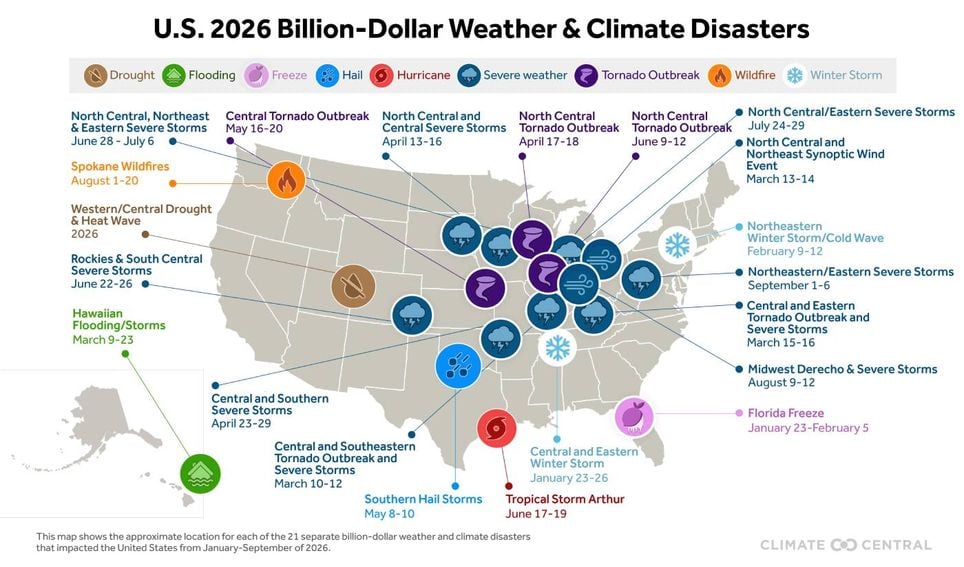
The number of billion-dollar wildfires in the U.S. has surged in recent decades, driving up economic losses and destruction. California has been hit hardest, but a developing super El Niño could offer some relief this winter. Researchers now have a better understanding of the economic toll that wildfires are taking in the country. Non-profit Climate Central is now including data on the costliest U.S. wildfires that have burned since 1980 in its U.S. Billion-Dollar Weather and Climate Disasters database. The evidence shows that the number of billion-dollar wildfires has exploded in recent decades. From 1980 through September of this year, there have been 31 separate billion-dollar wildfires reported in the U.S. The combined costs of these blazes have risen to close to $186 billion in damages. The fires were also responsible for the deaths of an estimated 373 people and the destruction of nearly 80,000 structures.
This excerpt comes from the named source. Read the original for the full reporting.
Read the original at Meteored United States