Local
US bishops vote to advance canonization cause of teenager from Philadelphia area
A Roundtable is a way to meet new people and discuss this article in person at a local coffee shop or other venue.
Roundtables are designed for groups of four, with a shared subject and room for everyone to speak. Come for discussion, with no dating expectation.
Source: OSV News
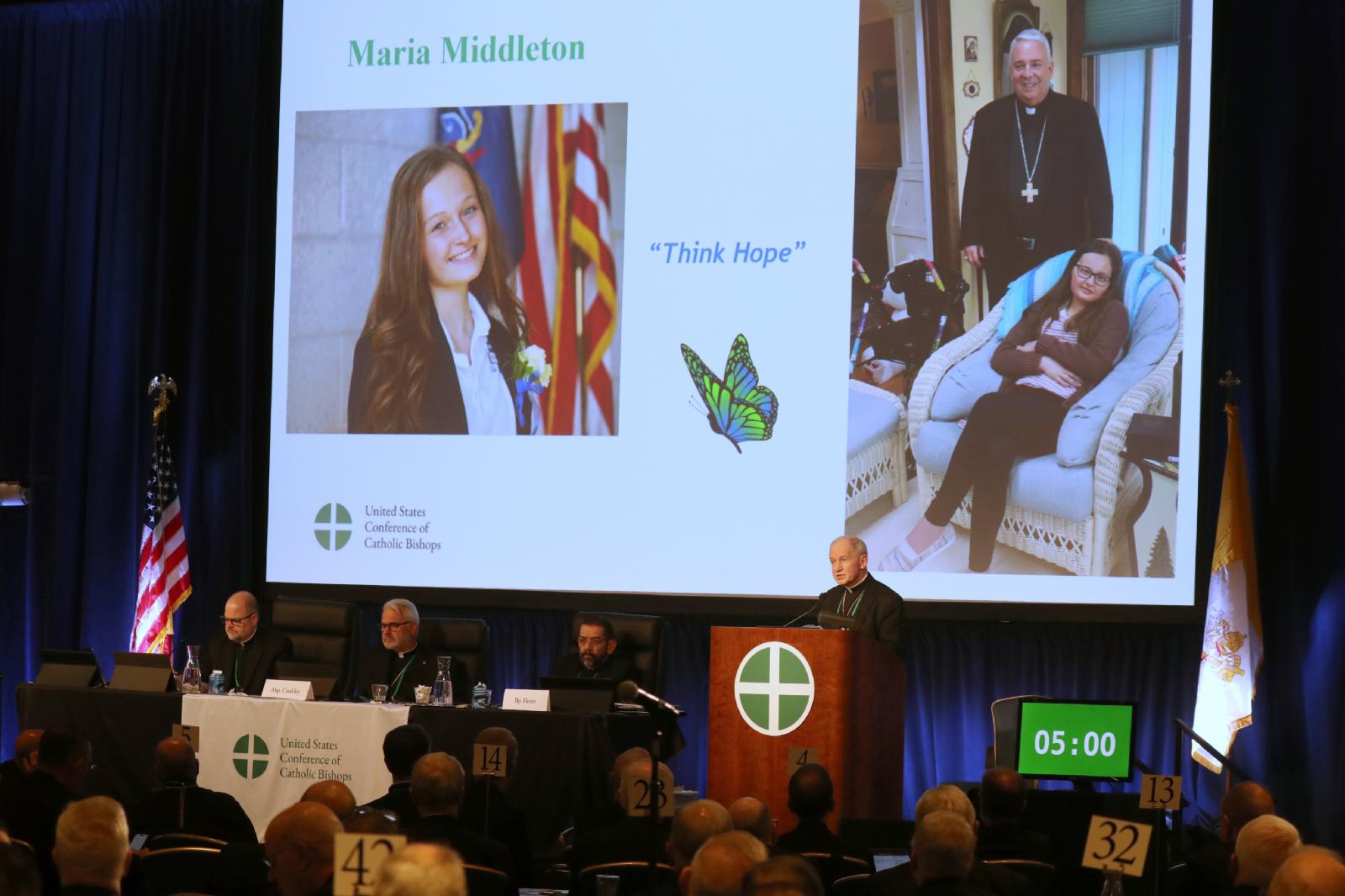
BALTIMORE: (OSV News) — Meeting in Baltimore for their annual fall plenary assembly, the members of the U.S. Conference of Catholic Bishops Nov. 17 offered overwhelming support for a canonization cause for a Pennsylvania teenager who died from terminal brain-stem cancer. Her cause is expected to be opened soon. Bishop Thomas J. Paprocki of Springfield, Illinois, as chair of the U.S. bishops’ Committee on Canonical Affairs and Church Governance, presented to the body of bishops, detailing the heroic suffering and faith of Maria Middleton, who died in 2020 at age 18. A life of witness Born in 2002, Maria Middleton’s family guided and gave witness to the importance of a relationship with God. She expressed early in her short life a love for the Marian and Eucharistic devotion, attending Eucharistic adoration starting at age 3 with her mother.
This excerpt comes from the named source. Read the original for the full reporting.
Read the original at OSV News


