Local
US reporter booted from talks after asking Trump about Jensen Huang in front of Xi
A Roundtable is a way to meet new people and discuss this article in person at a local coffee shop or other venue.
Roundtables are designed for groups of four, with a shared subject and room for everyone to speak. Come for discussion, with no dating expectation.
Source: Human Events
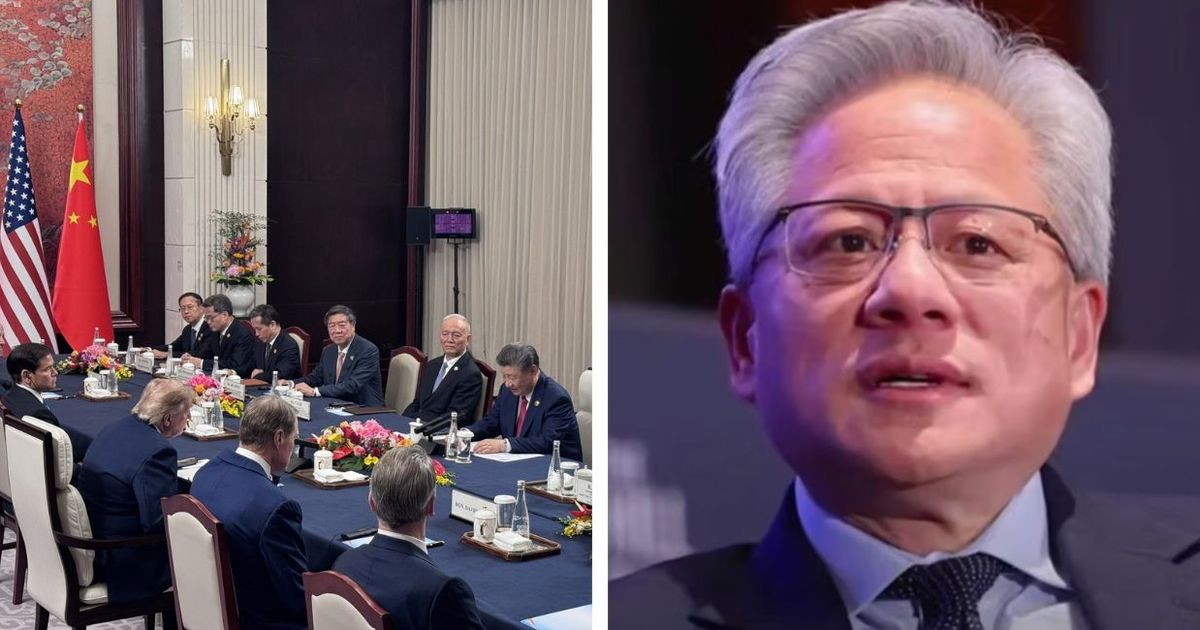
Bilateral meeting with US, China, Huang Original/Jack Posobiec, Screenshot/YouTubeReading modeReadingAaPaperAaSepiaAaNightA reporter was booted from attending a historic summit with US President Donald Trump, Chinese President Xi Jinping, and Russian President Vladimir Putin after she asked if former Nvidia CEO Jensen Huang was disloyal to the US. The reporter had been traveling with the White House press pool.“President Trump, has Jensen Huang been disloyal to the United States?” The reporter from Bloomberg shouted to Trump while he stood with Xi. Shouting questions is pretty normal for White House reporters trying to get their question answered.“A Bloomberg reporter in the travel pool will likely be prevented from going into the trilat because she asked a question in the bilat. The White House is still advocating for her inclusion, so we’ll see if she gets in.
This excerpt comes from the named source. Read the original for the full reporting.
Read the original at Human Events


