Local
Vivek and the End of Meritocracy
Meet in Common connects news with real conversations. Use ThinkMatch to arrange a Roundtable and meet people to discuss this story.
Source: Compact
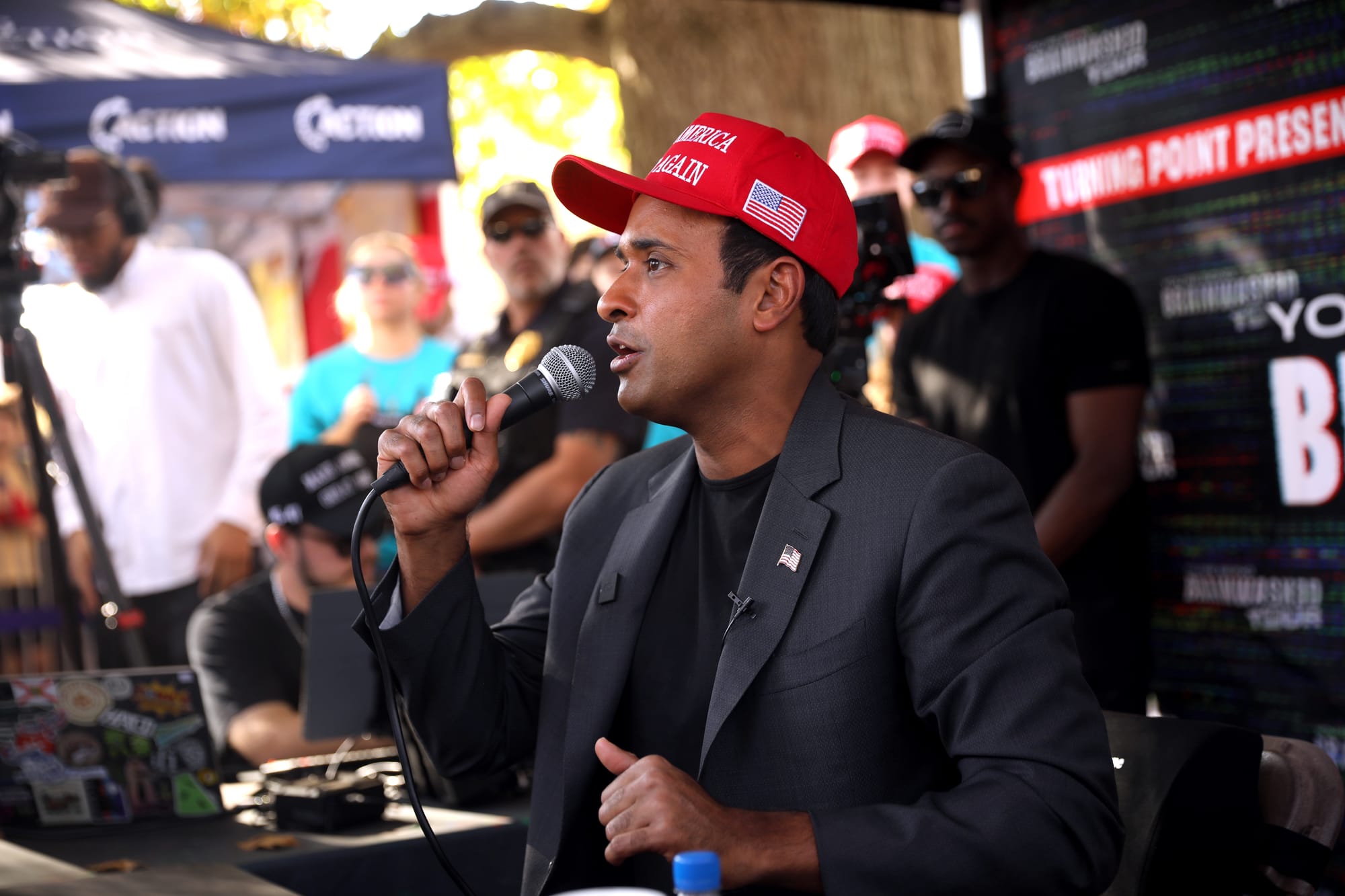
For decades, the achievements of South Asian immigrants were celebrated across the political spectrum as proof that the combination of liberalized immigration policies and meritocracy could bolster the American imperium. No one embodied this ideal better than Vivek Ramaswamy, the Republican nominee for Ohio governor. The son of Indian immigrants—an engineer and a psychiatrist—he earned degrees from Harvard and Yale before co-founding a biotech startup. Ramaswamy was well-positioned to demonstrate that America’s greatness lay in its recruitment of global talent. His 2024 presidential campaign attempted to leverage that proposition into politics. His timing was bad. By the time he came on the scene, much of the GOP was souring on the globalist consensus that previously had made the immigrant entrepreneur one of its favorite advertisements. The more stridently Ramaswamy defended the old paradigm, the more the immune system of the movement he had embraced treated him like a foreign body.
This excerpt comes from the named source. Read the original for the full reporting.
Read the original at Compact