Local
“We cannot stand idly by.” AME bishop urges mass turnout on Nov. 3 election day in push against efforts to mute the Black vote
Meet in Common connects news with real conversations. Use ThinkMatch to arrange a Roundtable and meet people to discuss this story.
Source: The Christian Recorder
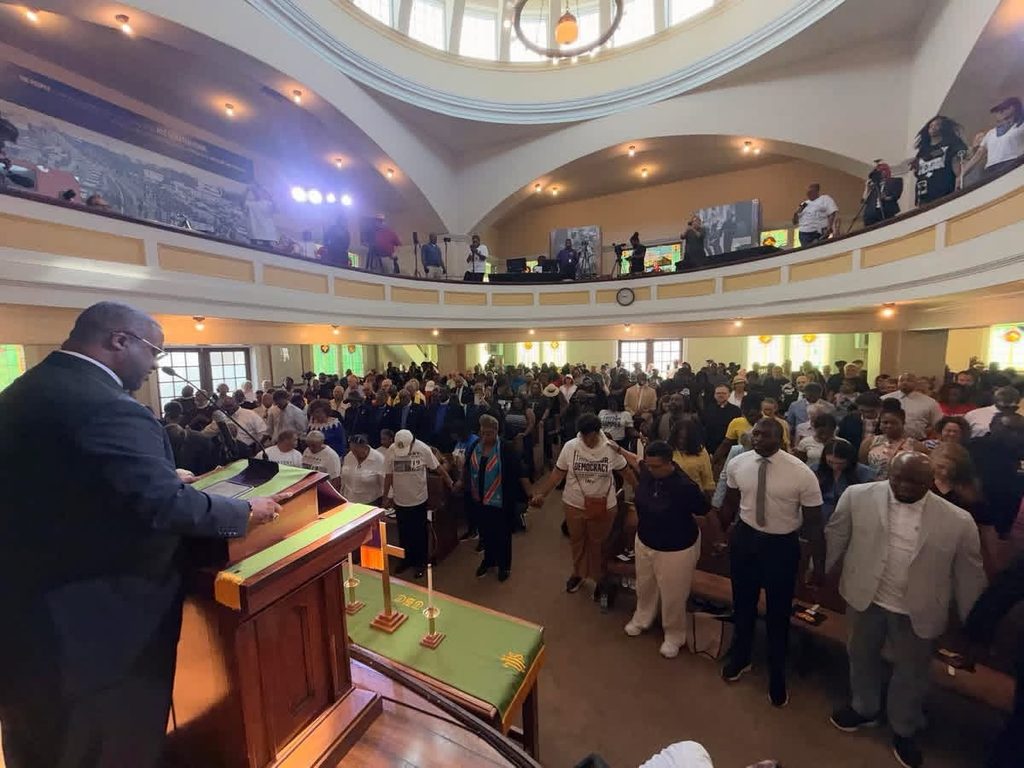
By Rev. Joseph D. Bryant, 9th Episcopal District The U.S. Supreme Court and state legislatures might have dealt a blow to African American representation and voting access, but the right to vote remains and must be exercised now more than ever, says Bishop Julius Harrison McAllister Jr. McAllister, the presiding prelate of the 9th Episcipal District in Alabama, was among the organizers in efforts to fight national attacks to dilute Black political power. A major pushback occurred last spring in Alabama where thousands converged for the “All Roads Lead to the South” day of mobilization. “The entire day on May 16 was a powerful illustration of self-determination as people from around the country, from various backgrounds, faiths and experience, gathered in solidarity and called for the restoration of justice at the ballot box,” McAllister recalled.
This excerpt comes from the named source. Read the original for the full reporting.
Read the original at The Christian Recorder